Ultimate Guide to Seasonal Content Scheduling
Last updated: February 4, 2026
Seasonal content scheduling ensures your social media posts align with key moments like holidays, events, and product launches. By planning months in advance, you avoid last-minute stress and maximize engagement during high-traffic periods. Here's what you need to know:
- Why It Matters: Seasonal posts resonate with audiences by connecting to timely events. They increase relevance, visibility, and engagement.
- How to Start: Build an annual calendar around holidays, events, and quirky observances that align with your brand. Focus on what your audience cares about.
- Platform-Specific Tips:
- Instagram & TikTok: Visual trends and short-form videos.
- LinkedIn: Professional milestones and thought leadership.
- X (Twitter) & Bluesky: Live reactions and memes.
- Pinterest: DIY guides and seasonal inspiration.
- Tools: Platforms like TheBlue.social simplify scheduling and analytics across multiple networks.
- Key Metrics: Track impressions, engagement, and conversions to refine your strategy.
Start planning 6–12 weeks ahead for major events, mix evergreen and trend-driven content, and track performance to adjust your approach. Seasonal scheduling keeps your brand consistent and relevant year-round.
How to plan a content calendar, find your niche, & build a brand | GROW on social media 2025 🌱
Why Schedule Seasonal Content
Seasonal content works because it taps into your audience's current mindset. When people browse social media during events like Valentine’s Day or the Super Bowl, they expect brands to acknowledge these moments. This helps keep your brand relevant and top-of-mind.
Planning seasonal posts ahead of time also allows you to take advantage of trending conversations, a tactic often called trendjacking. For example, in February 2025, HubSpot’s social team joined the buzz around the SNL50 Special Episode to promote their Canva integration on LinkedIn. The result? Over 5,800 reactions, 238 comments, and 160 reposts[6]. This became one of their top-performing posts, partly because they left room in their content calendar for timely, spontaneous ideas.
Different platforms offer unique opportunities for seasonal content. Instagram thrives on visual trends like Book Lovers Day, while LinkedIn shines during professional milestones such as Community Manager Appreciation Day[7]. Even niche holidays, like International Left-Handers Day, can drive engagement. With about 10% of the global population being left-handed[7], this seemingly small group represents a meaningful audience.
How Audiences Respond to Seasonal Content
Seasonal content resonates because it aligns with people’s emotions and behaviors at specific times. For instance, Blue Monday in January connects with the post-holiday blues, while Clean Off Your Desk Day appeals to those seeking a fresh start and improved productivity[7]. These moments create natural opportunities for brands to engage in a way that feels genuine.
Audiences also signal their interests through their interactions on social media. As content strategist Kate Erwin explains:
"You don't want your point of view to come out of nowhere. Connect it to what your audience already cares about. Thankfully, people are already telling you what they care about all the time on social."[6]
By aligning your message with what people are already thinking about, seasonal content feels timely instead of forced. This relevance often leads to higher engagement and better visibility in algorithms, which prioritize consistent and meaningful content[1]. Matching your content to audience sentiment during these key moments can help you stand out.
Seasonal Content Opportunities by Platform
Each platform has its strengths when it comes to seasonal content. Instagram and TikTok are perfect for short-form videos and visual trends, while LinkedIn is better suited for industry events and professional holidays[6]. Bluesky, which had over 23 million registered users by July 2024[9], is emerging as a platform for community-driven discussions.
| Platform | Best Seasonal Content Type | Example Opportunity |
|---|---|---|
| Visual trends, lifestyle holidays | Reels for Book Lovers Day | |
| TikTok | Trending sounds, challenges | Short videos for trending moments |
| Professional holidays, events | Thought leadership during conferences | |
| Bluesky | Community discussions | Threaded posts for niche celebrations |
The key is tailoring your content to the strengths of each platform. For instance, a seasonal Instagram Reel can be adapted for TikTok or YouTube Shorts[3], as long as the format and message fit the platform’s audience. This ensures you’re not just posting everywhere but posting strategically where your content will have the most impact. Up next, we’ll explore how to build an annual content calendar to maximize these opportunities.
Creating Your Annual Content Calendar
Once you understand how seasonal content can make an impact, it’s time to map out an annual content calendar. Start by focusing on what your audience truly cares about. Define your content pillars and clearly identify your target audience. This ensures that the seasonal events you choose are meaningful to your community instead of just filling up calendar slots. Your calendar becomes the backbone of your seasonal strategy across all platforms[2][5].
Finding Key Seasonal Events
Seasonal events can fall into four main categories: national holidays (like New Year’s Day or Thanksgiving), important cultural dates (such as Lunar New Year or Ramadan), headline-worthy events (think the Super Bowl or the Olympics), and quirky holidays (like Dress Up Your Pet Day)[7]. Big events like the Super Bowl are perfect for engaging audiences with live reactions or memes that resonate.
However, not every holiday will suit your brand. For instance, a pet supply company might prioritize National Dog Day, while a B2B software company likely wouldn’t. Stick to dates that align with your brand’s values and niche. Also, take note of seasonal slowdowns - like the European summer or the U.S. Thanksgiving week - when it might make sense to reduce posting or focus on lighter, evergreen content instead[7].
Some dates offer unique storytelling opportunities. For example, the 2026 Lunar New Year, marking the Year of the Fire Horse, symbolizes ambition and energy - perfect themes for connecting with your audience. Even quirky dates like Blue Monday, often labeled the “saddest day of the year,” have evolved into opportunities for meaningful discussions, such as mental health awareness[7].
Once you’ve picked your key dates, structure your production timeline accordingly.
Setting Up Your Content Production Timeline
To stay ahead of trends and avoid last-minute stress, plan seasonal campaigns at least three months in advance[5]. Colin Toh from Headphonesty shares his approach:
"I create my content calendar three months in advance by following trends and around product drops and review schedules."[5]
This preparation gives you time to refine your content and adapt to changes.
Maintain a consistent posting schedule throughout the week, but leave room for delays, especially for more complex projects[10]. Strike a balance between timely, trend-driven content and evergreen posts. Vikki Tokarz, Head of Community at Scribe, suggests:
"Write timely, viral content when you have it, and schedule your 'bread and butter' (evergreen) content to cultivate a persistent, relatable social presence."[2]
This strategy keeps your content flow steady, even during quieter periods.
Tools for Managing Your Content Calendar
To streamline your efforts, platforms like TheBlue.social provide tools for managing content across multiple platforms, including X (Twitter), Threads, Instagram, Pinterest, LinkedIn, Bluesky, and Mastodon - all from one dashboard. With Bluesky reaching 35.2 million users as of April 2024, it’s worth incorporating decentralized platforms into your strategy.
TheBlue.social offers several features to simplify seasonal planning, such as:
- A free hashtag generator to boost visibility on trending topics.
- Bluesky Analytics to monitor the performance of seasonal posts.
- A tool for generating alt text for images to enhance accessibility during high-volume posting periods.
- An Open Graph preview tool to see how your content will appear across platforms.
For better organization, use color-coded tags to categorize posts by type (e.g., educational, promotional, behind-the-scenes) or status (e.g., draft, approved, ready)[5][1]. This visual system helps you spot gaps in your calendar and maintain a well-rounded content mix throughout the year.
Creating Seasonal Content for Each Platform
Every social media platform has its own vibe and audience expectations. What grabs attention on Instagram might not land as well on LinkedIn. By understanding these differences, you can craft seasonal content that connects with your audience instead of just filling up your posting schedule.
What Works on Each Platform
Instagram is all about visual storytelling. Reels are especially effective for seasonal campaigns - think ASMR-style organization videos for Clean Off Your Desk Day or carousel posts highlighting holiday products. For example, in April 2024, UK gym chain Gymbox launched a playful "Gymbarks" class for dogs as an April Fools' Day joke. The campaign struck a chord, earning 903 likes and 51 comments by using humor to make the brand relatable[11]. While Instagram thrives on dynamic and fun content, professional networks like LinkedIn call for a more polished approach.
LinkedIn works best when seasonal content ties into professional insights or thought leadership. For instance, in early 2025, Semrush turned a research study on AI Overviews into a LinkedIn carousel, summarizing key findings instead of simply linking to the full report. This approach brought in 200 reactions and 56 reposts[6]. For culturally significant dates like Juneteenth or Pride Month, focus on education and community support instead of overt promotion. Multicultural marketing expert Lizette Williams emphasizes that Juneteenth is "a celebration of resilience - not a marketing moment, carefully crafted social media post, or latest African American-targeted innovation drop."[11] The same thoughtful approach applies to dates like World Mental Health Day.
X (formerly Twitter) and Bluesky thrive on live reactions, memes, and short-form text updates. These platforms are ideal for spontaneous commentary during events like the Super Bowl or the Golden Globes. Bluesky, with its 300-character limit, supports quick, real-time posts and threads[4]. Both platforms reward spur-of-the-moment creativity. As Travis Tyler, Senior Social Media Manager at Motion, puts it:
"Sometimes your best social posts will be these random, ad hoc, last-minute, 11th-hour ideas that seem stupid or silly. And then they end up crushing!"[6]
Pinterest excels as a go-to destination for seasonal inspiration. Think holiday-themed boards, DIY guides, and visually appealing posts that drive traffic to gift guides or how-to articles[10]. Meanwhile, Threads is great for text-based seasonal insights and fostering community discussions.
Repurposing Content Across Platforms
Once you've tailored content to fit each platform, repurposing becomes a smart way to stretch your efforts further. It’s not about copy-pasting but reimagining content for different audiences. The One-Third Rule can help: dedicate one-third of your seasonal calendar to repurposed content, one-third to user-generated content, and one-third to original creations[6]. For example, a research study could be reworked into a LinkedIn carousel, Instagram quote cards, and short video snippets for X.
A great example of this approach comes from the Olympic Games' social media accounts. During World Mental Health Day in October 2024, they shared breathwork and mental fitness tips used by Olympians. Partnering with Powerade and Athlete365, the campaign offered actionable self-care advice tailored to a global audience[11].
Tools like TheBlue.social make repurposing even easier. From a single dashboard, you can customize captions and media for X, Threads, Instagram, Pinterest, LinkedIn, Bluesky, and Mastodon. Features like resizing images for platform-specific dimensions, adjusting text for character limits (300 for Bluesky, 500 for Mastodon), and scheduling posts for peak times streamline the process. Plus, the Open Graph preview tool lets you see exactly how your content will appear across platforms before you publish.
To stay organized, build a centralized content bank for repurposing opportunities. Silvija Kemeraite, Social Media Manager at Omnisend, offers this advice:
"Make a calendar that works for you and refine it as you go. There's no point in creating a fancy calendar with hundreds of rows or columns that you don't use."[6]
It also helps to create 2–3 go-to templates, such as 30-second video highlights, step-by-step carousels, or quote graphics. These templates save time during busy seasonal periods and ensure your posts deliver value directly in the feed without requiring extra clicks[10].
Scheduling, Publishing, and Measuring Results
Timing your seasonal content correctly and understanding its impact can be the difference between a campaign that fizzles out and one that truly connects with your audience. It all starts with smart scheduling and ongoing performance analysis.
Best Times to Post Seasonal Content
Timing isn’t just important - it’s everything. For major holidays, start planning 6–8 weeks ahead, and for shopping events like Black Friday, give yourself 8–12 weeks to prepare[12]. For instance, if you’re gearing up for a Thanksgiving campaign, aim to kick off content creation by mid-September.
But lead time is only part of the equation. Posting when your audience is most active is just as critical. Engagement patterns vary by day, and tools like TheBlue.social can help pinpoint those ideal windows across platforms like X, Threads, Instagram, Pinterest, LinkedIn, Bluesky, and Mastodon. For example, Fall and Winter often see higher online activity due to holidays and back-to-school routines, while Summer tends to dip as people spend more time outdoors[13].
Consistency is another key factor. To stay on track, schedule posts for each platform during peak activity times[5]. A great way to maintain this rhythm is by batch-creating content - think 20–30 social posts or 4–6 blog posts at a time - to ensure you’re well-prepared for busy periods[12].
Once your schedule is set, the next step is to monitor how your content performs.
Using Analytics to Improve Your Strategy
Posting at the right time is a great start, but analyzing your results is what helps fine-tune your approach. Focus on three main metrics: Awareness (impressions, reach, follower growth), Engagement (likes, comments, shares, saves), and Conversion (click-through rates, sales, and website traffic)[8][6].
Adding UTM parameters to your links can help track which seasonal posts drive the most website conversions[8]. A great example is HubSpot’s February 2025 LinkedIn post promoting their Canva integration by tying it to the "SNL50 Special Episode." This timely post generated over 5,800 reactions, 238 comments, and 160 reposts, making it one of their top-performing posts on LinkedIn[6].
Tools like TheBlue.social’s analytics simplify tracking engagement across platforms like Bluesky (now boasting over 23 million users[9]), X, Threads, and LinkedIn - all in one place. Using tagging features, you can group seasonal posts by theme or topic and compare their performance to see what resonates most with your audience[5][1].
Kirsti Lang, Senior Content Writer at Buffer, explains:
"Analyzing content performance can also show you where you need to double down on your efforts or cut out the content entirely."[5]
To stay on top of your strategy, implement a multi-tiered review process: weekly reviews for quick adjustments like tweaking captions or posting times, monthly reviews to spot content trends, and quarterly reviews for big-picture strategy shifts[6]. With 90% of holiday shoppers influenced by online content[14], these insights can directly shape your approach and maximize your campaign’s impact.
Seasonal Content Templates and Examples
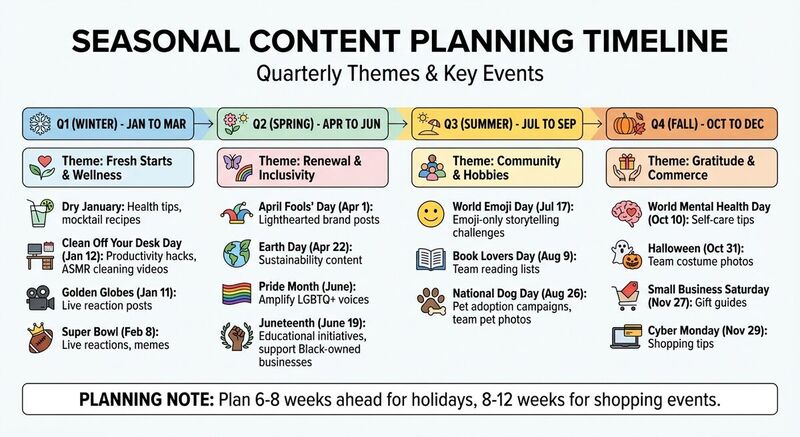 Thoughtfully planned content templates can simplify your seasonal strategy, complementing your annual planning framework. You might use approaches like the One-Third Rule (balancing repurposed, user-generated, and original content) or the 80/20 Rule (80% to inform, entertain, or educate, and 20% for promotion) [6][8].
Each quarter brings its own themes and opportunities:
Q1 (Winter) is all about fresh starts and wellness. Tap into trends like Dry January with health tips or mocktail recipes, celebrate Clean Off Your Desk Day (January 12) with productivity hacks or ASMR cleaning videos, and engage with major events like the Golden Globes (January 11) or the Super Bowl (February 8) through live reaction posts [11].
As winter gives way to renewal, Q2 (Spring) focuses on awareness and inclusivity. Use April Fools' Day (April 1) for lighthearted posts that humanize your brand, Earth Day (April 22) for content about sustainability, Pride Month (June) to amplify LGBTQ+ voices, and Juneteenth (June 19) to promote educational initiatives or Black-owned businesses [11].
The warmer months of Q3 (Summer) bring themes of community and hobbies. Celebrate World Emoji Day (July 17) with emoji-only storytelling challenges, mark Book Lovers Day (August 9) by sharing team reading lists, and drive engagement on National Dog Day (August 26) with pet adoption campaigns or team pet photos [11].
As the year winds down, Q4 (Fall) shifts toward gratitude and commerce. Share self-care tips for World Mental Health Day (October 10), post fun "Meet the Team" costume photos for Halloween (October 31), and use Small Business Saturday (November 27) and Cyber Monday (November 29) to showcase curated gift guides or shopping tips [11].
When scheduling posts using tools like TheBlue.social, include key details such as go-live dates (with time zones), platform-specific captions, visual formats, asset links, and UTM tracking parameters [3][8]. Use color-coded tags - like "Winter Promo" or "Spring Tips" - to organize posts by content focus or status, ensuring a balanced mix [5][1].
Silvija Kemeraite, Social Media Manager at Omnisend, emphasizes the importance of practicality:
"Make a calendar that works for you and refine it as you go. There's no point in creating a fancy calendar with hundreds of rows or columns that you don't use." [6]
These templates fit seamlessly into your annual calendar, ensuring your seasonal content aligns with your broader strategy.
Conclusion
Seasonal content scheduling transforms uncertainty into a clear, actionable plan that fosters meaningful engagement. The key to success lies in blending a structured approach with enough flexibility to adapt as needed.
By tailoring your content to each platform, you can expand your reach without adding extra work. Centralized analytics also play a crucial role, helping you pinpoint which content themes resonate most with your audience across various networks [3][8].
Tools like TheBlue.social make this process seamless. They offer advanced scheduling capabilities for platforms like X (Twitter), Threads, Instagram, Pinterest, LinkedIn, Bluesky, and Mastodon. Features like threaded post scheduling - unavailable natively on some platforms - combined with Bluesky Analytics, allow you to track performance and manage your seasonal strategy from a single dashboard. With over 23 million Bluesky users as of mid-2024, tapping into emerging audiences has never been more important [9].
Start building your seasonal content calendar today, incorporate a 10–20% production buffer, and let data guide your campaigns. Use these insights to refine your strategy and drive more impactful seasonal engagement.
FAQs
What’s the best way to track the success of my seasonal content?
To measure how well your seasonal content is performing, take advantage of analytics tools available in your social media scheduling platforms. These tools allow you to monitor key metrics such as engagement, follower growth, and reach. By analyzing these numbers, you can gain a better understanding of how your content resonates during specific seasons or campaigns.
For example, platforms like Bluesky offer tracking options through TheBlue.social, letting you monitor engagement and follower growth in real-time. Regularly reviewing this data helps you spot trends, fine-tune your strategy, and adjust your posting schedule to get the most out of peak seasons. Combine these insights with a detailed content calendar to keep your seasonal campaigns on track and impactful.
What are the best ways to repurpose content for different social media platforms?
Repurposing content is all about reshaping your message to suit the style and audience of each platform. Start by breaking down longer pieces of content - like blog posts - into bite-sized formats. For instance, you could turn a detailed article into an eye-catching Instagram carousel, a punchy tweet thread on X, or a casual, conversational post on Bluesky. Each platform thrives on its own type of engagement, so tailoring your content is key.
To keep your efforts organized, rely on a content calendar. This tool helps you plan and schedule posts, ensuring your messaging stays consistent while adapting to different platform requirements. If you're juggling multiple platforms, cross-posting tools can be a lifesaver. They streamline the process of sharing content, saving time while keeping your brand voice consistent.
Don’t forget to fine-tune your visuals, captions, and hashtags for each platform. Think about what your audience prefers and tweak your tone, style, and format accordingly. This approach not only grabs attention but also boosts engagement, helping your content reach its full potential.
How far in advance should I plan my seasonal content?
To keep your seasonal campaigns running smoothly, aim to plan your content calendar 3 to 6 months in advance. This timeline gives you the breathing room to dive into trend research, craft well-thought-out content, and collaborate effectively with your team for seamless execution.
Starting early also means you’re better prepared to handle surprises - whether it’s an unexpected event or a last-minute opportunity. This way, your content stays timely and keeps your audience engaged.