Ultimate Guide to Engagement-Driven Scheduling on Bluesky
Last updated: June 15, 2026
Timing matters on Bluesky, but it is not magic. A scheduled post is useful when it helps you show up consistently and then check what happened.
- Why scheduling helps: You can post consistently without being online at the exact moment.
- What to check: Timing, post quality, and the audience patterns in your own account.
- Where TheBlue.social fits: TheBlue gives you Bluesky scheduling, Bluesky analytics, starter-pack discovery, follow-back, and cleanup tools. It also has cross-posting for connected accounts.
- What not to assume: No tool can promise a universal best time or guaranteed engagement.
I would use TheBlue.social to schedule the post, check Bluesky performance afterward, and adjust the next batch.
Bluesky analytics & scheduling walkthrough
How Post Scheduling Works
Post scheduling on Bluesky is a simple loop: choose a time, publish consistently, then check what your audience did.
Key Factors Driving Engagement
Engagement on Bluesky depends on three main elements that shape how visible and impactful your posts are:
- Activity Timing: Posting when your audience is active can improve the first few minutes of visibility.
- Post Quality: Well-crafted posts that encourage interaction - such as comments and shares - tend to stay visible longer.
- Audience Behavior: Your followers' activity patterns create specific windows of opportunity. Using tools like Bluesky Analytics can help pinpoint the best times to post.
Now, let's address some common myths about scheduling.
Clearing Up Scheduling Misconceptions
Scheduling posts effectively involves understanding timing, quality, and audience habits. Here's the truth behind some widespread myths:
Myth 1: Scheduled Posts Are Less Effective
Truth: Posts scheduled for peak activity times often perform better than those posted manually at random times.
Myth 2: Posting More Means More Engagement
Truth: Fewer, well-timed, high-quality posts consistently outperform frequent, unplanned posts.
Myth 3: There's a Universal Best Time to Post Truth: The ideal posting time depends on several factors, including:
| Factor | Why It Matters for Scheduling |
|---|---|
| Audience Location | Different time zones require tailored timing. |
| Content Type | Some types of content resonate better at specific times. |
| Industry | Professional topics may perform better during work hours. |
| Demographics | Age and profession influence when users are most active. |
To make the most of post scheduling, rely on analytics to uncover your audience's habits and fine-tune your strategy. This way, you can align your content with the times and formats that resonate most with your followers.
Scheduling Tools for Bluesky
Keeping your audience engaged on Bluesky requires consistent and well-timed posts. Here's a look at the platform's current limitations and how third-party tools can help.
Current Platform Limitations
Bluesky doesn't offer built-in scheduling options, which can make it tough for users to stay active and reach their audience effectively. Here are some common challenges:
| Challenge | Impact on Engagement |
|---|---|
| Manual Posting | Requires users to be online during peak activity hours |
| Time Zone Differences | Makes it harder to connect with a global audience |
| Lack of Consistency | Disrupts regular posting schedules |
| Limited Analytics | Restricts insights into post performance |
These issues make it harder to maintain a steady and effective presence on the platform.
How TheBlue.social Helps
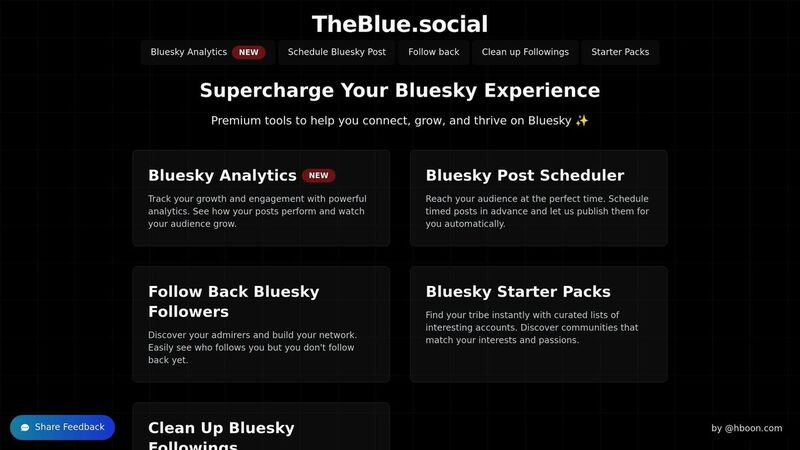
TheBlue.social is useful here because it keeps the scheduling and Bluesky analytics work close together. It is not a generic social suite; it is a Bluesky-first toolbench with cross-posting around it.
- Post Scheduler: Plan Bluesky posts ahead of time, then cross-post to connected accounts when that makes sense.
- Analytics Dashboard: Check Bluesky engagement, follower growth, and timing patterns after posts go out.
- Bluesky workflow tools: Use follow-back, following cleanup, starter-pack discovery, status checks, and network stats around the publishing work.
Some users come for scheduling; others use the Bluesky account tools around it. CPBlue Wave Diamond shared on March 12, 2025:
"This is a godsend, will make it easy for me to follow back as I promised, doing it manually when I have over 1,000 to catch up is not realistic..." [1]
The paid plan raises limits and adds deeper workflow support. Use the free tools first if you just need to test the fit.
Post scheduling best practices
Finding Peak Posting Times
Understanding when your audience is most active is key to boosting engagement. Tools like TheBlue.social's analytics dashboard can help you track activity and engagement across different times of the day.
| Time Period | Engagement Factors |
|---|---|
| Morning (6 AM - 10 AM) | Commute times, morning routines |
| Midday (11 AM - 2 PM) | Lunch breaks, casual browsing |
| Evening (6 PM - 9 PM) | Post-work leisure time |
| Late Night (10 PM - 12 AM) | Entertainment hours |
Once you identify these peak times, focus on creating content that resonates with your audience.
Writing Engaging Posts
Make your posts stand out by following these tips:
- Catchy headlines: Grab attention instantly.
- Rich media: Use visuals like images, videos, or GIFs to make your posts more appealing.
- Interactive elements: Ask questions or use polls to spark conversations.
Building a Posting Schedule
After identifying peak times and crafting engaging content, create a consistent posting schedule. This helps maintain audience interest and builds a reliable rhythm.
- Mix up your content while keeping a steady posting frequency.
- Factor in different time zones if your audience spans multiple regions.
A planned schedule helps you stay visible without turning every post into a manual reminder.
Tracking Post Performance
Once you've established a posting routine, it's time to measure its impact and use the data to make improvements.
Engagement Metrics Guide
Keep an eye on these metrics to fine-tune your strategy:
| Metric | Purpose | Why It's Important |
|---|---|---|
| Likes | Shows appreciation for posts | Reflects how well your content resonates. |
| Reposts | Tracks content sharing | Highlights potential for wider reach. |
| Comments | Measures audience interaction | Indicates the quality of conversations. |
| Follower Growth | Tracks audience expansion | Shows how your community is growing. |
| Click-through Rate | Monitors link engagement | Evaluates the success of your calls-to-action. |
Using TheBlue.social Analytics
TheBlue.social's analytics dashboard offers tools to dig into your performance:
- Peak Engagement Times: Discover when your audience is most active, even across time zones.
- Content Interaction: Identify which types of posts spark the most engagement.
- Follower Growth Trends: Understand how your audience is evolving.
- Post Reach: Measure how far your content travels.
Users have described the analytics as useful for understanding Bluesky performance and deciding what to post next [1].
Use these numbers as feedback, not as a promise. One good time slot can stop working when your topic or audience changes.
Adjusting Your Strategy
Use the data you gather to tweak your approach:
- Peak Times: Use TheBlue.social's data to adjust your posting schedule for when your audience is most active.
- Content Performance: Focus on the topics and formats that drive the most engagement.
- Posting Frequency: Analyze how often you post and its effect on follower growth to find the right balance.
TheBlue.social's analytics can help you identify:
- The content themes your audience connects with most.
- The best times to post for higher visibility.
- Trends in engagement and growth.
- How different audience segments respond to your content.
Conclusion
Getting Started
Start with a small loop:
Set up your tools
Use TheBlue.social's analytics dashboard for Bluesky tracking and scheduling. Users have found it useful:
"You can enter this link and follow/unfollow people with a single click. It's an extremely comfortable app. It has statistics, auto-posting features, etc. 🏼" - OCOzy06 [1]
Execute your strategy
Take advantage of TheBlue.social's key features, including:
- Post scheduling around your observed active windows
- Analytics for tracking likes, reposts, and comments
- Tools for managing followers
- Starter packs to help discover new communities
Track and adjust
Use the analytics suite to measure your progress and tweak your approach. Scheduling for engagement is a process. Use the results to adjust the next posts.
FAQs
What's the best way to find out when my audience is most active on Bluesky?
To identify the best times to reach your audience on Bluesky, use analytics tools to monitor engagement patterns and activity trends. Look for the windows where your own followers respond.
TheBlue.social keeps this practical: schedule Bluesky posts, check engagement afterward, and compare timing over time.
What are the main advantages of using TheBlue.social to schedule posts on Bluesky instead of posting manually?
Using TheBlue.social for Bluesky scheduling saves the manual posting step and gives you analytics in the same workflow. You can draft posts, schedule them, then check engagement and follower growth afterward.
That is the useful part: fewer manual reminders, more consistent posting, and a feedback loop based on actual Bluesky results.
How can I use analytics to refine my engagement strategy on Bluesky?
Analytics are essential for understanding what works and what doesn't in your engagement strategy. By tracking metrics like post interactions and follower growth over time, you can identify trends and adjust your approach to better connect with your audience.
Tools like TheBlue.social make this process easier by showing engagement patterns in one place. Test posting times, content types, and reply habits, then keep the pieces that work.