5 Steps to Build Viewer Personas for YouTube
Last updated: January 3, 2026
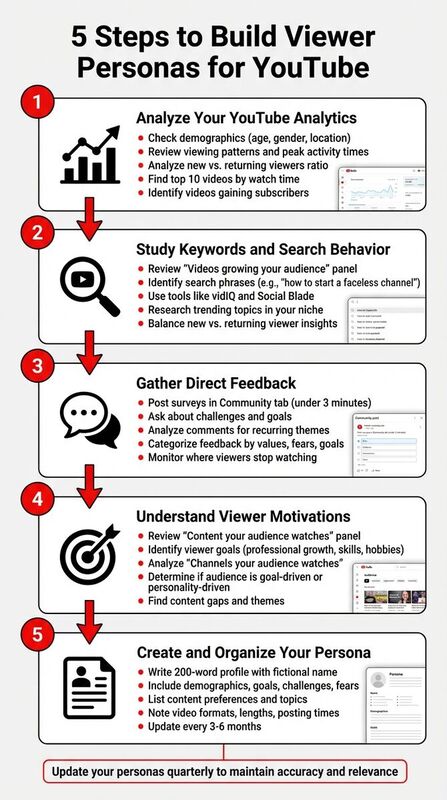
Creating content that resonates starts with understanding who you're making it for. A viewer persona is a fictional profile based on real data about your audience's demographics, behaviors, and motivations. This guide outlines five steps to build a viewer persona using YouTube Analytics, audience feedback, and research. Here's the quick breakdown:
- Analyze Your YouTube Analytics: Check demographics, viewing patterns, and your best-performing videos.
- Study Keywords and Search Behavior: Understand what your audience is searching for and why.
- Get Direct Feedback: Use surveys, polls, and comments to learn about your viewers' challenges and interests.
- Understand Viewer Motivations: Identify their goals and why they watch your content.
- Create and Organize Your Persona: Write a detailed profile with key traits, preferences, and actionable insights.
Audience Research Explained: Find Your Ideal Viewers
Step 1: Review Your YouTube Analytics
YouTube Studio provides a treasure trove of free data that helps you understand who's watching your videos and how they're engaging with your content. For instance, the Audience tab offers insights into metrics like unique viewers, subscribers gained over time, and the balance between new and returning viewers [1].
Check Demographics and Viewing Patterns
Dive into details like age, gender, and location to create a clearer picture of your typical viewer [1][3]. Also, pay attention to peak activity times - this can guide you in scheduling uploads for maximum visibility. Keep an eye on the new versus returning viewers metric. A high return rate suggests your audience is loyal and keeps coming back for more. On the other hand, if most of your viewers are new, it could mean your content is being discovered but isn't yet building long-term engagement. In that case, narrowing your focus to a specific niche might help attract a more consistent audience.
Find Your Best-Performing Videos
After understanding your audience's demographics, take a closer look at which videos are grabbing their attention and converting them into subscribers. Head to the Watch Time tab to see which videos rank highest in total watch time [1]. Your top 10 videos can reveal patterns in the topics or formats that resonate most with viewers. Use the Subscribers Gained filter to identify content that successfully turns viewers into subscribers [1].
The Videos growing your audience panel is especially useful - it highlights the videos that convert first-time viewers into repeat fans. Analyze these videos closely to spot recurring themes in topics, editing styles, or presentation formats that work well. Additionally, check the Channels your audience watches panel to get a sense of your viewers' broader interests and preferences [1].
Step 2: Study Keywords and Search Behavior
Once you've reviewed your analytics, it's time to dig deeper into what your audience is searching for. Keywords don’t just highlight popular topics - they reveal your viewers' goals, challenges, and the solutions they’re actively seeking [1].
Review Keywords That Bring Viewers to Your Channel
Head over to YouTube Studio and check out the Videos growing your audience panel. This section shows you the topics and keywords that are turning casual viewers into loyal fans [1]. Look for specific phrases like "how to start a faceless channel" or "get 1,000 subscribers." These phrases reflect clear objectives your audience is eager to achieve [1].
To add more depth to this data, visit the Audience tab to examine demographics. For example, if most of your viewers are between 25–34 years old and searching for "side hustle ideas", it’s a good bet they’re exploring practical ways to supplement their income during this stage of life. Also, check the Channels your audience watches section for more clues about their interests and search behavior [1][3].
"The next step is creating videos that appeal to the needs of that persona, plus using relevant keywords that signal their deepest desires." - Lydia Sweatt, Blog Manager, vidIQ [1]
Once you’ve gathered insights from your channel, expand your research to include trending topics outside of your immediate content.
Research Trending Topics in Your Niche
External tools can help you uncover what’s currently resonating in your niche. Platforms like vidIQ can pinpoint trending keywords and spark ideas for fresh video content [1]. You can also use Social Blade to analyze real-time data from top creators and see which topics are fueling their subscriber growth [6].
Pay attention to the balance between new and returning viewers in your analytics. If the majority are new viewers, it’s likely they’re finding your videos through "how-to" searches and moving on after their problem is solved [1]. To build a more engaged and loyal audience, focus on keywords that encourage repeat visits and long-term interest.
Step 3: Gather Direct Feedback from Your Audience
Analytics can tell you what your viewers are doing, but direct feedback helps you understand why. Combining these insights gives you a more complete picture of your audience, making it easier to refine your viewer persona.
Use Surveys and Polls to Ask the Right Questions
The Community tab in YouTube Studio is a great tool for connecting directly with your audience. You can use it to post surveys and polls that help you learn more about your subscribers. To keep engagement high, make sure your surveys take less than three minutes to complete [5]. Focus on specific, meaningful questions like, "What’s your biggest challenge?" or "How can my content help you reach your goals?" [5]. These kinds of questions dig deeper than surface-level interests and reveal the real issues your audience wants to address.
"Surveys are typically best used to learn more about your audience's demographic information (age, income, location, etc…) and general pain points and goals." - Teachable [5]
To encourage participation, you might want to offer small rewards like gift cards or discounts, especially if you sell products or services [5]. Once you’ve gathered responses, organize them by factors like age group or how viewers found your channel. For instance, people who discover you through search might have different priorities than those who come from social media [5]. These insights help you add a personal touch to your viewer persona, complementing the hard numbers from your analytics.
Dive Into Your Comments Section
Your comments section is a goldmine of information. Pay close attention to recurring questions, concerns, or suggestions - these reveal what your viewers care about most [4]. Take note of the exact words and phrases they use. Incorporating this language into your video titles and descriptions makes your content feel more relatable and less generic [3][5].
It’s helpful to categorize comments into themes like values, fears, and goals [3][5]. For example, if you notice the same question popping up across multiple videos, that’s a clear signal for a future topic. Don’t just passively read comments - engage with your audience by replying and asking follow-up questions to better understand their needs [8].
Monitor Where Viewers Stop Watching
While comments provide qualitative feedback, your watch time data offers a quantitative look at engagement. In YouTube Studio Analytics, click "See More" to view a ranked list of videos by watch time [1]. This helps you identify which topics and formats keep viewers hooked and which ones fall flat.
Pay special attention to the New vs. Returning Viewers ratio. If most of your viewers are new and don’t come back, your content might be too broad. On the other hand, a high percentage of returning viewers indicates you’re building a loyal audience that values your content [1].
"Eventually, viewers will need a deeper reason to stay on your channel, like getting a problem solved or enjoying your personality." - Lydia Sweatt, Blog Manager, vidIQ [1]
You can also filter watch time data by 7, 30, or 90 days to identify trends in engagement [1]. Look at which videos have high watch times and then cross-check them with your subscription data. This will show you which types of content are most effective at turning casual viewers into long-term subscribers [1].
Step 4: Understand Viewer Motivations and Goals
Now that you’ve gathered data and feedback, it’s time to dig deeper into why your audience watches your content.
Knowing their age or location is helpful, but it doesn’t explain why they clicked on your video in the first place. The real gold lies in uncovering their goals and the problems they’re trying to solve. This kind of insight turns general demographic stats into detailed personas that can shape your content strategy.
Identify What Your Viewers Want to Accomplish
Your YouTube analytics, particularly the "Content your audience watches" panel in the Audience tab, can reveal the broader topics and creators your viewers are drawn to [1]. This data offers a window into their motivations. Are they looking to grow professionally, pick up a new skill, or build something meaningful? Understanding this helps you create content that aligns with their goals.
For example:
- Hobbyists may watch for personal growth or enjoyment.
- Professionals might be after resources to advance their careers.
Your messaging should reflect these distinct needs [5].
Additionally, the "Videos growing your audience" panel can help you determine which topics convert one-time viewers into loyal subscribers. If your tutorial videos get a lot of initial views but don’t bring people back, it might mean your audience is goal-driven - they’re watching to solve a specific problem and then moving on. On the flip side, if viewers keep returning for more, it suggests they’re either deeply engaged with your content or resonate with your personality.
This sets the stage for examining other creators your audience follows for even more insights.
Look at Similar Channels and Their Audiences
You don’t have to figure this out on your own. The "Channels your audience watches" section in YouTube Studio can show you which other creators your viewers follow [1]. Take time to analyze these channels. Look for content gaps or themes that validate your understanding of what your audience values [3].
For instance, if these channels emphasize quick, actionable tips, your viewers likely prioritize efficiency and practical solutions. On the other hand, if they feature more in-depth, personality-driven content, your audience might be seeking both expertise and a personal connection. This research can help you fine-tune your approach and ensure your content meets their expectations.
Step 5: Write and Organize Your Viewer Persona
Now it’s time to pull everything together and create a clear, actionable viewer persona.
Write a Profile Description
Start by crafting a 200-word narrative that paints a vivid picture of your viewer persona. Give them a relatable, fictional name like Matt or Amanda and pair it with a stock photo to bring the persona to life. This profile should include key details like their age, gender, location, education level, family status, goals, challenges, and fears [1][3]. For instance, if your analytics reveal that your audience tunes in during weekday evenings and follows channels centered on career development, your persona could be a 28-year-old professional who watches YouTube on their phone after work to pick up new skills for career advancement.
Once the basics are outlined, focus on their content preferences to guide your channel's strategy.
List Content Preferences and Topics
Using your YouTube analytics, identify the video formats, topics, and traits that resonate most with your audience [1][2][5]. Check the "Videos growing your audience" panel in YouTube Studio to find which content drives subscriptions and repeat views. For example, if tutorial-style videos perform best, note that your persona values step-by-step guides over vlogs or commentary. If your viewers primarily watch on mobile during commutes, shorter videos with clear chapter markers may be more effective than long-form content [2][5].
Compile a quick-reference list of their favorite topics, ideal video lengths, and preferred posting times. This list will act as your go-to guide for planning content.
Use Content Management Tools
To stay organized and reach your audience across platforms, consider using tools like TheBlue.social. This platform offers a cross-posting scheduler that allows you to manage content across X (Twitter), Threads, Instagram, Pinterest, Bluesky, and Mastodon - all from one place. It’s a great way to repurpose your YouTube content while keeping your messaging consistent.
If you’re branching out to other platforms, TheBlue.social’s analytics tools can help you track performance and refine your strategy. Don’t forget to revisit and update your persona every quarter using fresh data [4].
Conclusion
By analyzing your data, researching keywords, gathering feedback, and understanding audience motivations, you’ve built a solid foundation for creating detailed viewer personas. These personas will now serve as a guide for every video decision you make. But remember, they’re not static - your audience will grow and change, and your personas need to evolve with them. As Caitlin Nuttall, Content Marketing Manager at GWI, explains:
"Creating your personas and neglecting them will reduce their value. It's essential to keep them fresh and update them with the latest insight so they remain truly representative of who you're trying to target" [4].
Regular updates are crucial. Revisit your personas every three to six months, using new data from YouTube Analytics, viewer comments, and surveys [4]. If you notice shifts in metrics like new versus returning viewers, a slowdown in growth, or campaigns missing the mark, it’s likely time to refine your profiles. For fast-changing niches, such as technology or current events, quarterly updates may be necessary to stay aligned with audience trends [7].
The benefits are clear. Companies that maintain accurate, up-to-date personas often see dramatic improvements in engagement. For example, one organization reported a staggering 7,000% increase in post interactions after refining their audience profiles [4]. Understanding your audience makes every decision - from video topics and formats to scheduling - much more focused and effective.
Make sure these personas stay front and center. Pin them to your workspace, consult them before filming, and share them with your team [2]. The goal isn’t to achieve perfection but to create a research-driven framework that eliminates guesswork, strengthens your strategy, and deepens your connection with viewers.
FAQs
How can I find out more about my audience's demographics on YouTube?
To get insights into your audience's demographics, head over to YouTube Studio, click on Analytics, and go to the Audience tab. Here, you’ll uncover details such as the age, gender, and primary locations of your viewers. These insights can guide you in creating content that resonates more effectively with your audience.
How can I gather direct feedback from my YouTube audience?
To get feedback from your YouTube audience, start by taking advantage of the platform’s built-in features. Encourage viewers to interact through likes, dislikes, and comments. At the end of your videos, ask specific questions to spark thoughtful responses in the comments section.
The Community tab is another great tool. Use it to post polls or updates, asking for input on video topics or formats. If you're hosting live streams or premieres, keep an eye on the live chat for immediate reactions. You can even ask viewers to share their opinions or vote using emojis.
For deeper insights, consider creating short surveys with tools like Google Forms or Typeform. Share the survey link in your video description or as a pinned comment, and mention it during the video to boost participation. By blending quick feedback from YouTube’s tools with occasional surveys, you’ll gain valuable input to fine-tune your content strategy.
How often should I refresh my viewer personas to keep them accurate?
To keep your content relevant and impactful, it’s important to update your viewer personas whenever there’s a noticeable shift in your audience’s behavior, preferences, or demographics. These changes might surface through your channel’s analytics, feedback from recent campaigns, or emerging trends in how viewers engage with your content.
By revisiting and refining your personas regularly, you can ensure they reflect your audience’s current interests and needs. This alignment helps you craft content that truly connects with your viewers and supports your channel’s growth.