11 Influencer Analytics Tools for 2025
Last updated: March 6, 2026
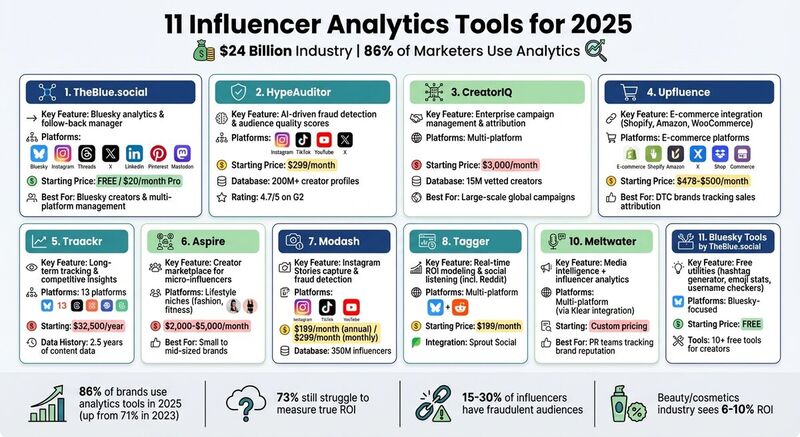
In 2025, influencer marketing tools became indispensable as brands sought to measure ROI in a $24 billion industry. With 86% of marketers relying on analytics, the focus shifted to real-time insights, fraud detection, and cross-platform management. Key tools now emphasize actionable metrics like conversion rates and revenue attribution, helping brands cut through data overload and optimize campaigns. Below are 11 standout platforms for influencer analytics:
- TheBlue.social: Bluesky analytics, multi-platform management, and tools like a follow-back manager for influencers. Free and Pro plans ($20/month).
- HypeAuditor: Fraud detection with AI-driven audience quality scores. Plans start at $299/month.
- CreatorIQ: Enterprise-level campaign management and advanced attribution. Pricing begins at $3,000/month.
- Upfluence: E-commerce integration with Shopify and Amazon. Pricing ranges from $478-$500/month.
- Traackr: Long-term influencer tracking and competitive insights. Enterprise pricing starts at $32,500/year.
- Aspire: Marketplace for small to mid-sized brands managing micro-influencers. Pricing averages $2,000-$5,000/month.
- Modash: Captures disappearing Instagram Stories and flags suspicious engagement. Pricing starts at $199/month.
- Tagger: Real-time ROI modeling and social listening, including Reddit. Starts at $199/month.
- Influencity: Predictive analytics and lookalike modeling for niche creators. Pricing starts at $318/month.
- Meltwater: Links influencer analytics with media intelligence for PR teams. Custom pricing.
- Bluesky Tools by TheBlue.social: Free tools like hashtag generators, emoji stats, and username availability checkers.
Quick Comparison
| Tool | Key Feature | Platforms Covered | Starting Price |
|---|---|---|---|
| TheBlue.social | Bluesky analytics, follow-back | Bluesky, Instagram, Threads, etc. | Free / $20/month |
| HypeAuditor | Fraud detection, audience scoring | Instagram, TikTok, YouTube, X | $299/month |
| CreatorIQ | Enterprise campaign management | Multi-platform | $3,000/month |
| Upfluence | E-commerce integration | Shopify, Amazon, WooCommerce | $478-$500/month |
| Traackr | Long-term tracking, insights | Multi-platform | $32,500/year |
| Aspire | Micro-influencer marketplace | Lifestyle niches | $2,000-$5,000/month |
| Modash | Story tracking, fraud detection | Instagram, TikTok, YouTube | $199/month |
| Tagger | ROI modeling, social listening | Multi-platform, incl. Reddit | $199/month |
| Influencity | Predictive analytics, modeling | Multi-platform | $318/month |
| Meltwater | Media intelligence integration | Multi-platform | Custom pricing |
| Bluesky Tools | Free tools for Bluesky users | Bluesky | Free |
With these tools, brands can streamline influencer campaigns, monitor performance, and improve ROI tracking. Whether you're managing a small project or a global initiative, the right platform ensures you're making data-driven decisions.
Top 10 Best Influencer Marketing Platforms 2025 | Features, Pricing & Reviews
TheBlue.social: Analytics for Bluesky and Multi-Platform Management
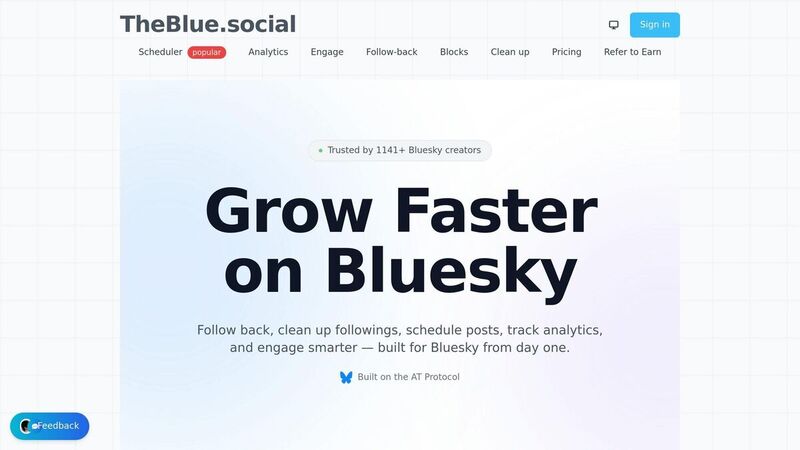
As Bluesky continues to expand, brands and influencers are looking for tools to track their performance effectively. Enter TheBlue.social - a platform that not only offers Bluesky analytics but also includes a cross-posting scheduler to manage content across platforms like X (formerly Twitter), Threads, Instagram, LinkedIn, Pinterest, Mastodon, and Bluesky itself. With over 1,098 Bluesky creators on board, TheBlue.social provides real-time engagement tracking, all while prioritizing privacy through the AT Protocol [9].
One of its standout features is the Follow-back Manager, which has become a favorite among influencers aiming to grow their communities efficiently. Bluesky creator DWDwander shared their experience:
"I just used @theblue.social to follow-back my followers on Bluesky! THE EASIEST way to follow back" [9].
The free version of this tool allows users to follow back up to 100 accounts. For those needing more, the Pro subscription ($20/month) increases that limit to 2,000 accounts, helping influencers maintain strong follower-to-following ratios - an important credibility marker on decentralized platforms [9].
Main Features of TheBlue.social
TheBlue.social is packed with features designed to simplify collaboration and maximize engagement across platforms. Its analytics suite provides free users with 7-day tracking, while Pro subscribers gain access to extended 30- and 90-day insights. This data helps creators fine-tune their content strategies and identify trends, such as which posts drive follower growth. Weekly growth reports further break down account performance, making it easier to pinpoint what’s working.
A particularly handy feature for Pro users is Smart Engagement, which allows for rapid interaction. In just two minutes, users can reply to 20 posts, making audience engagement faster and more efficient [9].
For those managing influencer campaigns, the cross-posting scheduler is a game-changer. This universal editor supports threads, images, and videos, and schedules posts using natural language. It also handles platform-specific quirks automatically - adjusting character limits for Mastodon, optimizing hashtag placement for Threads, and resizing media files to meet each network’s requirements. The platform also offers access to over 89,981 curated Starter Packs, helping users discover relevant Bluesky communities to grow their reach [9].
Free Tools for Bluesky Users
TheBlue.social extends its capabilities with a variety of free tools tailored for Bluesky users. For instance, the Bluesky Network Statistics tool provides real-time insights into the Bluesky ecosystem. Meanwhile, My Top 3 Emojis adds a fun twist by letting creators showcase their most-used emojis - a simple yet effective way to engage with audiences.
Other free tools include the hashtag generator, which suggests relevant tags to increase reach, and the Alt Text generator, which helps ensure posts are accessible to all users.
For influencers aiming to maintain consistent branding, username availability checkers for platforms like Bluesky, X, Threads, TikTok, and Instagram make it easy to secure matching handles across networks.
Additionally, status checkers for platforms such as Bluesky, X, LinkedIn, and Mastodon help users avoid posting during outages, saving time and effort. These tools ensure creators stay informed and proactive in managing their online presence.
Top Influencer Analytics Tools for 2025
Here are five standout tools that help brands collaborate with influencers, monitor performance, detect fraud, and measure ROI across multiple platforms.
HypeAuditor
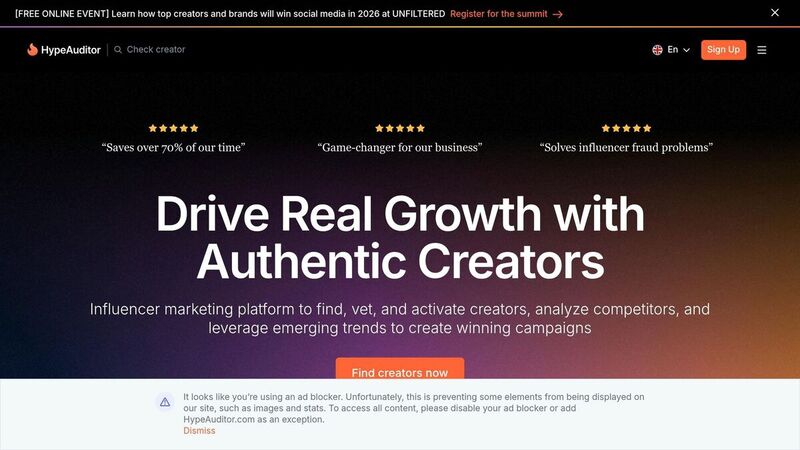
HypeAuditor is a leader in fraud detection. With a database of over 200 million creator profiles spanning Instagram, TikTok, YouTube, and X, as well as emerging platforms like Bluesky (see Bluesky stats), it uses AI to evaluate engagement patterns and assign an Audience Quality Score (AQS) [3][4]. This score helps brands steer clear of the 15–30% of influencers who may have purchased followers or rely on engagement pods [1]. The platform flags issues like sudden spikes in followers or mismatched audience demographics [1]. Plans start at $299 per month, and G2 users rate it 4.7 out of 5, praising its visual reporting and ease of use for internal reviews [3][5][10].
Next, let's look at how CreatorIQ supports large-scale campaigns.
CreatorIQ
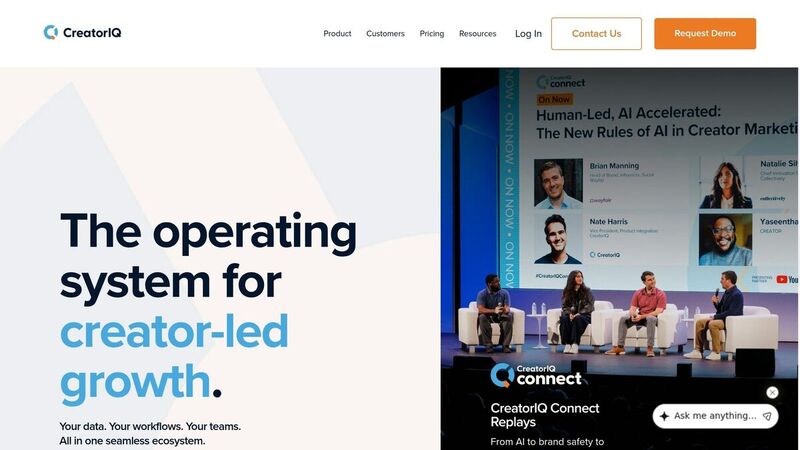
CreatorIQ is tailored for enterprise brands managing extensive influencer networks. It acts as a centralized system for global campaigns, offering features like a private creator marketplace, compliance tracking, and advanced attribution models [12][10]. With a database of 15 million vetted creators, it uses the Brand Vitality Score (VIT) to measure campaign success against industry benchmarks [4][11]. Major corporations, especially in CPG and tech, rely on CreatorIQ for orchestrating global product launches that require strict governance [12]. Pricing begins around $3,000 per month, with annual commitments [11]. While the platform delivers detailed metrics, smaller teams may find the onboarding process challenging [8].
For e-commerce-focused brands, Upfluence offers a unique approach.
Upfluence
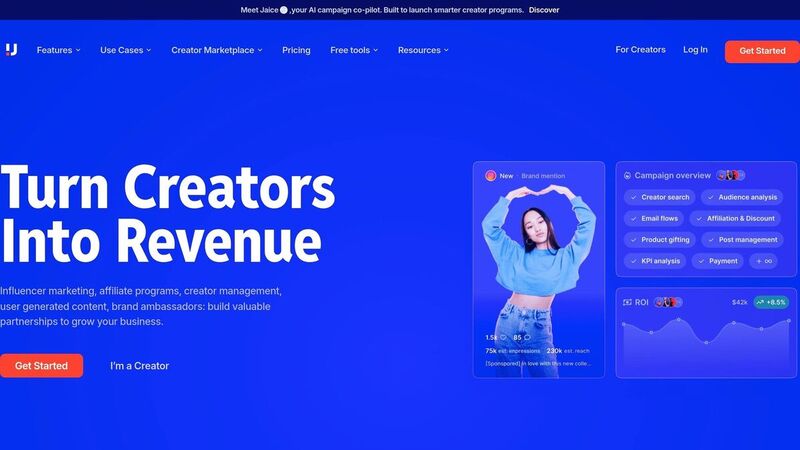
Upfluence specializes in e-commerce integration, connecting directly with Shopify, WooCommerce, and Amazon to track actual sales generated by influencers [8][6]. Its "Live Capture" feature identifies influential visitors already browsing a brand's website, enabling marketers to turn customers into ambassadors [11][12]. This is particularly effective for Direct-to-Consumer (DTC) brands. The platform tracks UTM links, promo codes, and revenue attribution in real-time, simplifying ROI calculations [2][8]. Pricing ranges from $478 to $500 per month, with a 12-month commitment [11]. Users appreciate its extensive database, though the annual minimum cost may deter smaller brands [7].
Traackr, on the other hand, focuses on long-term influencer relationships.
Traackr
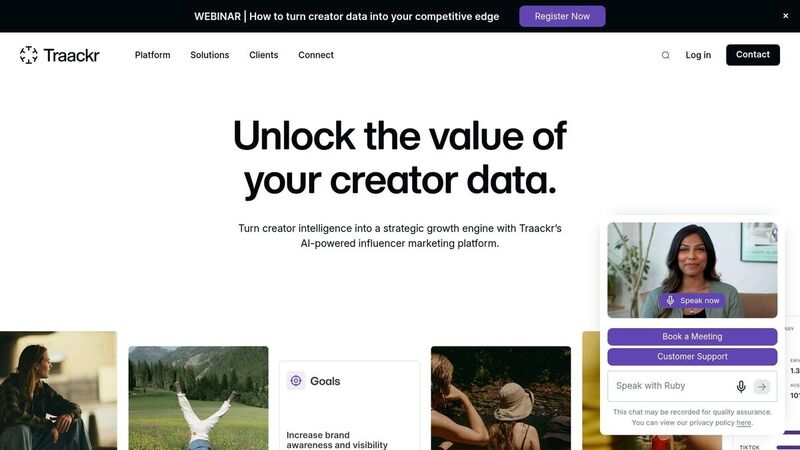
Traackr excels in managing long-term influencer partnerships and competitive insights. It stores 2.5 years of historical content data across 13 platforms, helping brands assess an influencer's consistency and past performance [3][11]. PR and communications teams favor it for its broader focus on brand reputation rather than short-term campaigns [12][10]. Features like real-time ROI dashboards and competitive benchmarking allow brands to monitor their "share of voice" within their industry [3][6]. Enterprise pricing starts at $32,500 per year [4][11]. While the cost is high, large brands managing complex, multi-year programs find the depth of data invaluable. Users often highlight its reliability and intuitive interface [12].
Finally, Aspire offers a marketplace-driven model.
Aspire
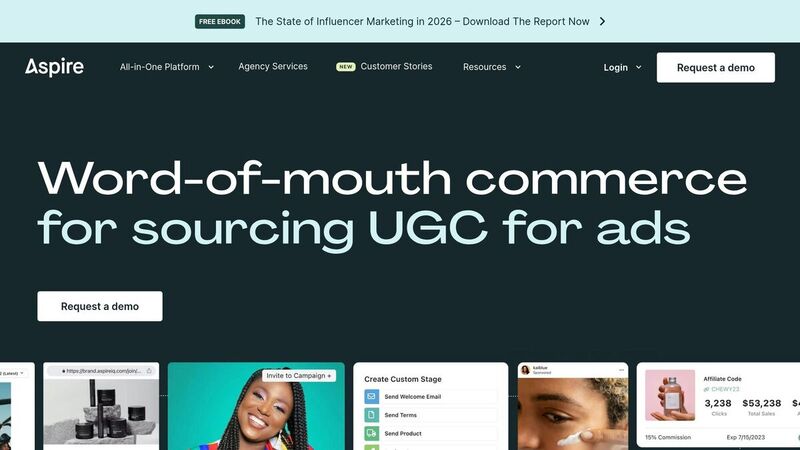
Aspire operates an inbound creator marketplace where influencers can apply directly to brands [3][4]. This is ideal for small to mid-sized brands in lifestyle niches like fashion and fitness, where managing micro-influencers and community building are key [10][4]. The platform automates tasks like outreach, content approvals, and gifting workflows, saving teams significant time. It also provides performance dashboards to track engagement, reach, and conversions [3][4]. Pricing averages $2,000 per month, with costs reaching up to $5,000 depending on campaign needs [8][11]. Users appreciate its user-friendly collaboration tools and branded content libraries, though the lack of in-app payment processing is a downside [8][4]. For DTC brands focused on authentic community building, Aspire offers a streamlined way to scale influencer efforts.
New Analytics Tools to Watch in 2025
As brands push for sharper insights, new analytics tools are stepping in to tackle challenges that were often overlooked in the past. These tools are designed to enhance real-time campaign management by addressing issues like disappearing content and improving predictive modeling. They don’t replace established platforms but instead fill in critical gaps, offering new ways to measure and optimize influencer campaigns.
Modash
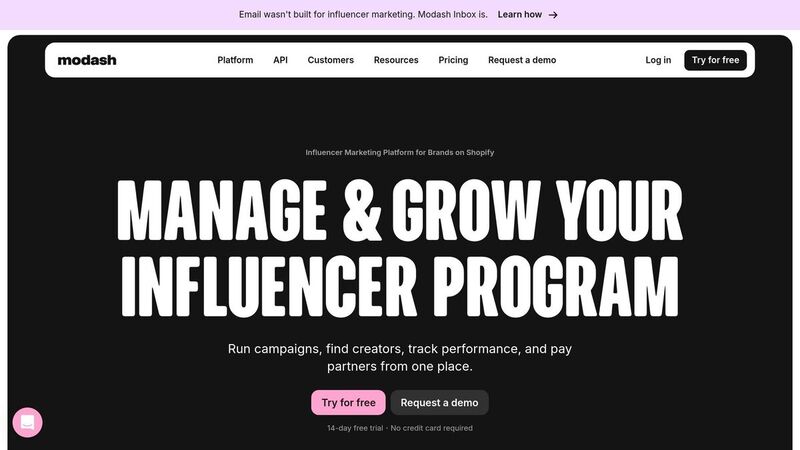
Modash solves the problem of disappearing Instagram Stories, a common pain point for marketers. By automatically capturing and saving these fleeting posts in a centralized dashboard, Modash makes it easier for teams to spot unusual engagement patterns as they happen. This is especially helpful for direct-to-consumer brands running campaigns with micro-influencers. The platform boasts a database of 350 million influencers across Instagram, TikTok, and YouTube, focusing on smaller creators. It also flags suspicious engagement, helping teams avoid fraud before signing contracts. Pricing starts at $199 per month (annual billing) or $299 per month on a monthly plan [13][11]. Tech and SaaS companies particularly benefit from Modash’s emphasis on audience quality over follower counts.
The next tool, Tagger, takes real-time analytics to another level by centralizing performance metrics across various channels.
Tagger
Tagger, now integrated with Sprout Social, brings together earned, owned, and paid metrics into one dashboard. It also offers real-time ROI modeling that updates as campaigns progress. What sets Tagger apart is its social listening feature, which even includes platforms like Reddit, allowing brands to tap into authentic product discussions. Starting at $199 per month [13], Tagger is ideal for brands managing multiple marketing channels. Its unified dashboard not only saves time but also uncovers insights that might otherwise go unnoticed.
Influencity, on the other hand, focuses on predictive analytics to help brands forecast campaign success.
Influencity
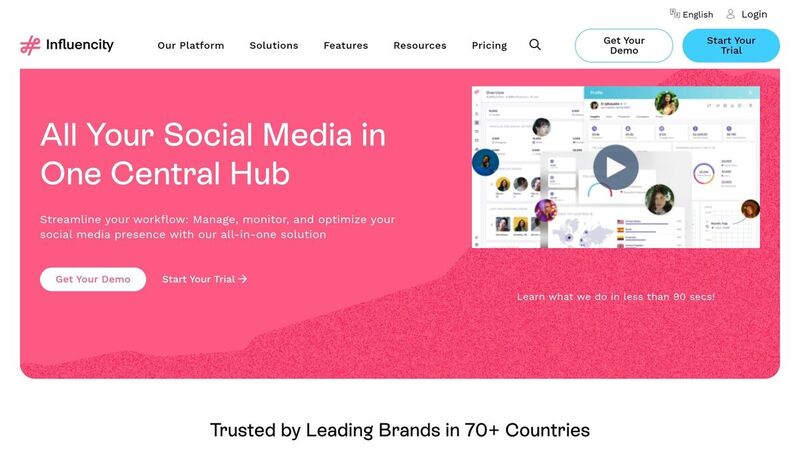
Influencity uses AI-powered lookalike modeling to predict campaign performance and identify niche creators who align with a brand’s values. Its "Influencer Universe" feature maps out relationships between creators, topics, and audiences, providing a visual guide to potential collaborations. With pricing starting at $318 per month [13], the platform is particularly useful for global brands aiming to scale campaigns without sacrificing quality. For example, agencies in the beauty and cosmetics industry - where ROI can hit 6–10% [2] - use Influencity to forecast reach and engagement with greater precision.
Meanwhile, Meltwater connects influencer analytics with broader media intelligence for a more comprehensive view.
Meltwater
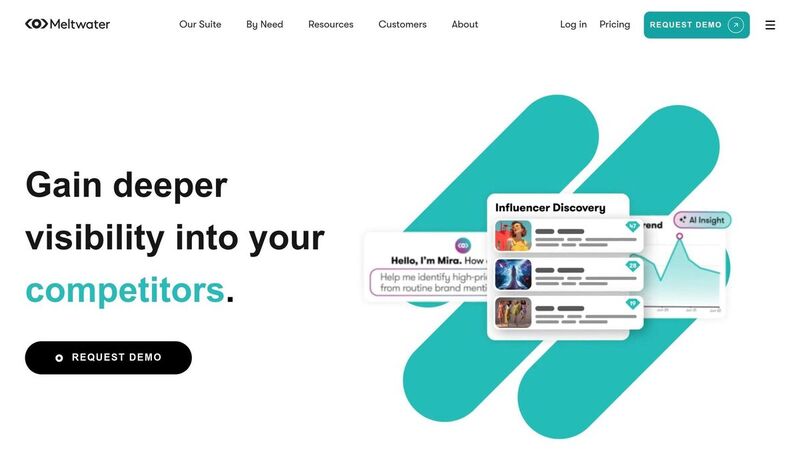
Meltwater combines influencer analytics with media intelligence, linking influencer content to press coverage and calculating share of voice across both social and news platforms. Through its Klear integration, Meltwater helps PR and communications teams see influencers as part of a larger brand reputation strategy. For instance, when influencer posts lead to media coverage, Meltwater tracks the resulting earned media value and ties it back to the original campaign. Using natural language processing, it also flags potential brand safety issues by analyzing sentiment. Pricing is custom and available upon request [13][14]. Large corporations running complex, multi-channel campaigns find Meltwater’s approach invaluable for understanding how influencer efforts shape overall brand perception.
"The difference between a successful campaign and a wasted budget often comes down to tracking - because if you're not measuring, you're guessing." - HypeAuditor [13]
With 86% of brands now relying on analytics tools to measure influencer performance in 2025 - up from 71% in 2023 [1] - these platforms are carving out their own niches. By addressing issues like content capture, predictive modeling, and cross-channel attribution, they’re meeting the evolving needs of modern marketers.
Conclusion
When planning your 2025 campaigns, focus on tools that align with your specific goals. Features like live dashboards, fraud detection, and real-time alerts are no longer optional - they’re essential. For campaigns on platforms like TikTok, Instagram Reels, and YouTube Shorts, prioritize tools that go beyond vanity metrics. Metrics such as save and share rates offer a clearer picture of engagement quality than follower counts ever could.
For brands exploring newer platforms like Bluesky, TheBlue.social is worth considering. This platform offers real-time analytics tailored for the AT Protocol, along with tools for managing multiple platforms like X (Twitter), Threads, Instagram, Pinterest, LinkedIn, and Mastodon. With Bluesky now boasting over 42 million users as of February 2026 [15], TheBlue.social helps brands stay consistent and discover niche audiences. Their free tools, including username availability checkers and a Starter Pack browser, are especially useful for creators. One user even shared:
"I just used @theblue.social to follow-back my followers on Bluesky! THE EASIEST way to follow back" [9].
This shows the value of real-time analytics and user-friendly tools. Whether you’re a startup looking for free or low-cost solutions or a global enterprise managing multi-team workflows, your tools will dictate whether you measure success or make educated guesses. With 73% of brands still struggling to measure true ROI [2], standardizing your tracking methods - using consistent UTM parameters and unique promo codes - is crucial. Fraud detection audits are also a smart move, as studies show 15–30% of influencers have highly fraudulent audiences [1].
Keep a close eye on your campaigns to quickly identify fraud or capitalize on viral trends. The best tools are those that focus on engagement quality, real-time optimization, and cross-platform attribution. Whether you’re monitoring a single influencer or managing a global initiative, the right tools ensure you’re measuring success - not just guessing.
FAQs
What metrics best demonstrate influencer ROI in 2025?
When evaluating influencer ROI in 2025, some metrics stand out as the most effective. Engagement rate is a top priority, as it measures how actively the audience interacts with the influencer's content, reflecting both interest and loyalty. Another crucial factor is audience demographics, which confirm whether the influencer's followers align with the intended target market.
Additionally, authentic reach - which filters out bot traffic - provides a clearer picture of real audience exposure. Lastly, conversion metrics like sales and click-through rates directly tie influencer efforts to business results. These metrics together offer a well-rounded view of campaign performance and its impact on business growth.
How do I spot influencer fraud before signing a deal?
To spot influencer fraud, it's crucial to dive into a few key metrics. Start by examining audience authenticity - this means identifying whether their followers are real people or just bots. Tools designed for this purpose can flag fake followers and give you a clearer picture.
Next, look at engagement quality. If an influencer has a massive follower count but unusually low engagement rates, that’s a red flag. Genuine followers interact with content, so a mismatch here could indicate something's off.
Finally, verify audience demographics. Check if the influencer’s followers align with your target market. This ensures your partnership reaches the right people and delivers value. By taking these steps, you can confidently choose authentic influencers and base your decisions on solid data.
How can I track conversions across multiple platforms?
To monitor conversions seamlessly across various platforms, consider using an influencer analytics tool that gathers data from multiple social media channels in one place. These tools offer real-time metrics such as engagement rates, audience demographics, and conversion statistics, making it easier to evaluate the overall impact of your campaigns. Additionally, features like ROI attribution, fraud detection, and performance benchmarking provide deeper insights into how well influencers are performing. This allows you to refine partnerships and enhance campaign outcomes effectively.