Ultimate Guide to Influencer Discovery in 2025
Last updated: March 27, 2026
Finding the right influencers has become more precise and efficient in 2025, thanks to advanced tools and data-driven strategies. Here's what you need to know:
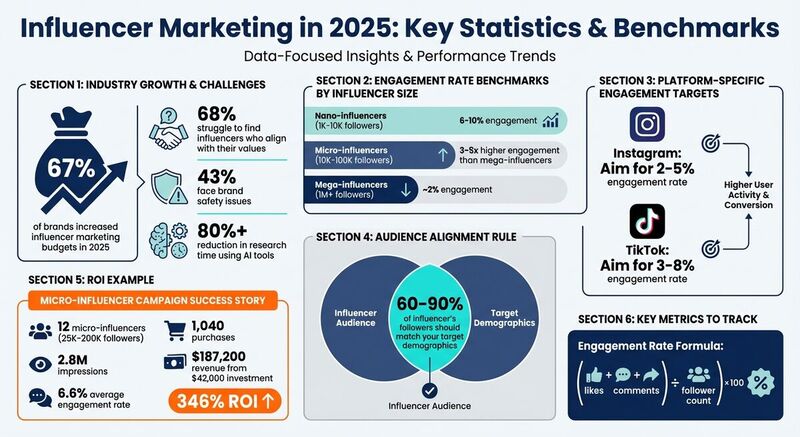
- Brands are spending more: 67% increased influencer marketing budgets in 2025.
- Challenges persist: 68% struggle to find influencers who align with their values, and 43% face brand safety issues.
- AI tools save time: Platforms now cut research time by over 80% by analyzing profiles for engagement, audience fit, and safety.
- Micro-influencers perform better: Creators with 10,000-100,000 followers deliver 3–5x higher engagement rates than mega-influencers.
- Metrics matter: Engagement rates, audience demographics, and content quality are key for identifying the right fit.
- Emerging platforms: Bluesky, Threads, and Discord are gaining traction for influencer marketing.
If you're serious about influencer marketing, focus on engagement quality, audience alignment, and leveraging AI tools for faster, data-backed decisions. This ensures partnerships that drive real results while minimizing risks.
Top 10 Best Influencer Marketing Platforms 2025 | Features, Pricing & Reviews
Key Metrics for Identifying Influencers
When it comes to finding the right influencers in 2025, brands are moving beyond simple follower counts. Instead, they’re focusing on metrics that show real impact - the kind that drives clicks, sales, and lasting customer loyalty. Here’s a closer look at the key factors that matter most.
Understanding Engagement Rates
Engagement rate is a crucial metric for spotting influencers who can deliver results. The formula is simple: (likes + comments + shares ÷ follower count) × 100 [1]. This figure reveals whether an influencer’s audience is genuinely paying attention or just scrolling past.
Engagement benchmarks depend on the influencer’s size. Nano-influencers (1,000-10,000 followers) often achieve 6-10% engagement, while mega-influencers (1M+ followers) typically hover around 2% [2]. For platforms like Instagram, aim for 2-5% engagement, and for TikTok, look for 3-8% [1]. If an influencer with 500,000 followers gets only 200 likes per post, it’s a red flag - they may have bought followers or rely on engagement pods.
"Engagement rate is far more important than follower count. A high engagement rate means followers are paying attention and more likely to take action when your product is featured." - Nicole P. Dunford, Author, Ecommerce Fastlane [3]
But numbers alone don’t tell the full story. It’s essential to check the quality of comments. Look for meaningful interactions like thoughtful questions or back-and-forth conversations. On the flip side, generic emojis or one-word comments could hint at bot activity [2]. Influencers who actively engage with their audience build trust, which often leads to higher conversions.
For example, in 2025, a sustainable activewear brand partnered with 12 micro-influencers (25,000-200,000 followers), all boasting engagement rates of at least 3%. The campaign delivered 2.8 million impressions, a 6.6% average engagement rate, and 1,040 purchases, generating $187,200 in revenue from a $42,000 investment - a 346% ROI [2].
Once you’ve confirmed engagement quality, the next step is ensuring the influencer’s audience matches your brand.
Analyzing Audience Demographics
An influencer’s follower count won’t matter if their audience doesn’t align with your target market. Ideally, 60-90% of their followers should match your key demographics - factors like age, location, interests, and income level [1][2]. Most social platforms provide basic audience breakdowns, but AI tools can dive deeper, identifying traits like purchasing habits and brand preferences.
Geographic alignment is especially important for brands with shipping or regional restrictions. For instance, if your product is only available in the US and UK, check the influencer’s "Top Countries" data before reaching out [3]. Similarly, if you’re targeting Gen Z, an influencer whose audience skews older won’t be the right fit, no matter how strong their engagement is.
"A creator with 50,000 followers whose audience is 90% your target demographic outperforms a creator with 500,000 followers whose audience barely matches." - InfluenceFlow Guide [1]
In 2025, authenticity scoring has become a critical tool for vetting influencers. Sudden spikes in follower counts or inconsistent engagement can signal manipulation. Manual checks also help - review past partnerships to see if they align with your industry and suggest an audience that’s open to similar products [2].
Once you’re sure the audience is a match, it’s time to evaluate the influencer’s content.
Evaluating Content Authenticity
Trust is the foundation of effective influencer marketing, and authentic content is key to building it. Start by reviewing the influencer’s last 20-30 posts. Look for consistent posting schedules, high-quality visuals, and a tone that matches your brand. Irregular engagement or long gaps between posts can indicate purchased activity [1].
Pay attention to how they handle sponsored content. The best influencers integrate brand partnerships seamlessly into their usual style, avoiding posts that feel forced or out of place. Check their tagged photos to see how they interact with other brands and whether their audience responds positively to sponsored content [1].
Another important tool in 2025 is comment sentiment analysis. Beyond counting likes and shares, AI tools can evaluate whether comments express genuine interest or negative feedback [2]. High engagement won’t help if the sentiment is mostly critical or indifferent. Also, watch for influencers who ignore their audience - those who actively respond to comments are more likely to drive meaningful action [2].
Micro-influencers (10,000-100,000 followers) have become particularly valuable. They often achieve 3-5x higher engagement rates than mega-influencers, thanks to their closer relationships with followers [2]. Their smaller, more engaged communities feel personal, which leads to stronger conversions and lower acquisition costs.
Manual vs. Automated Influencer Discovery
After setting your key metrics, the next step is deciding between manual and automated influencer discovery. Each method has its own strengths, and knowing the trade-offs can help you choose the best fit for your campaign.
Manual Discovery on Social Media Platforms
Manual discovery means personally searching for and evaluating influencers using tools available on social platforms. For example, on Instagram, you can explore niche hashtags like #greenbeauty or #techreviews. Check both the "Top" and "Recent" tabs to find creators who consistently engage with their audience. You can also look at your competitors’ tagged photos to identify influencers already active in your industry [3].
On platforms like X (formerly Twitter), Threads, and Bluesky, you can track industry-specific keywords and connect with emerging thought leaders before they become widely popular. This early engagement can help you secure lower rates and build genuine relationships [2]. TikTok offers options like the TikTok Creator Marketplace, or you can search trending sounds and hashtags relevant to your niche to find creators producing high-completion-rate content [1].
The biggest upside to manual discovery? It’s cost-effective in terms of money, requiring little to no financial investment. This makes it a great option for smaller campaigns or brands working with limited budgets [2]. However, it comes with a major downside: time. Manual research can take weeks, involving endless profile scrolling and juggling spreadsheets for data organization [2]. It’s also easy to fall for vanity metrics like high follower counts that don’t guarantee authentic engagement. Without specialized tools, spotting fake followers, bots, or engagement pods becomes a real challenge [2].
"Traditional methods - cold emails, Instagram searches, and word-of-mouth recommendations - simply don't scale anymore, especially for agencies managing multiple campaigns simultaneously." - InfluenceFlow [2]
Manual discovery is best suited for smaller campaigns or when testing a new niche. But if you’re aiming for speed and accuracy, automated tools are the way to go.
Benefits of AI-Powered Discovery Tools
AI-powered tools take the hassle out of influencer discovery, offering faster results packed with detailed data. Instead of spending hours scrolling, you can use Natural Language Processing (NLP) to perform conversational searches like "sustainable fashion micro-influencers in the UK" [2]. These tools generate ranked, verified lists in seconds, often including authenticity scores to help identify fake followers or manipulated engagement metrics [2].
AI tools can cut research time by over 80% compared to manual methods [2]. For instance, a SaaS marketing agency reduced its monthly research workload from 120 hours to just 25 hours, allowing them to scale operations without hiring additional staff. Creators found through these tools also delivered 23% higher engagement rates compared to those discovered manually [2].
Beyond saving time, AI tools provide in-depth analytics that are nearly impossible to gather manually. This includes audience demographics, engagement authenticity, and fake follower detection [2].
Of course, there’s a trade-off: cost. While some tools like InfluenceFlow are completely free, others like HypeAuditor charge between $99 and $999 per month, and enterprise platforms like CreatorIQ start at $500+ per month [2]. There’s also a learning curve - some platforms require technical know-how for setup and API integration [2].
Still, 68% of brands report difficulty in finding creators who genuinely align with their values using traditional methods [2]. AI tools solve this challenge by providing data-backed insights, helping you move beyond guesswork to make smarter partnerships. While manual discovery works for smaller campaigns, AI tools are indispensable for scaling and achieving precision in larger efforts.
Top AI-Powered Influencer Discovery Tools in 2025
As influencer marketing continues to grow, the demand for tools that combine efficiency with precision has soared. With 69.1% of marketers already integrating AI into their workflows, the influencer discovery process has become more streamlined and effective [8]. Whether you're targeting niche creators, tackling fraud, or managing large-scale campaigns, these platforms cater to a variety of needs. Here's a breakdown of the standout tools shaping the landscape in 2025.
Modash and HypeAuditor Features
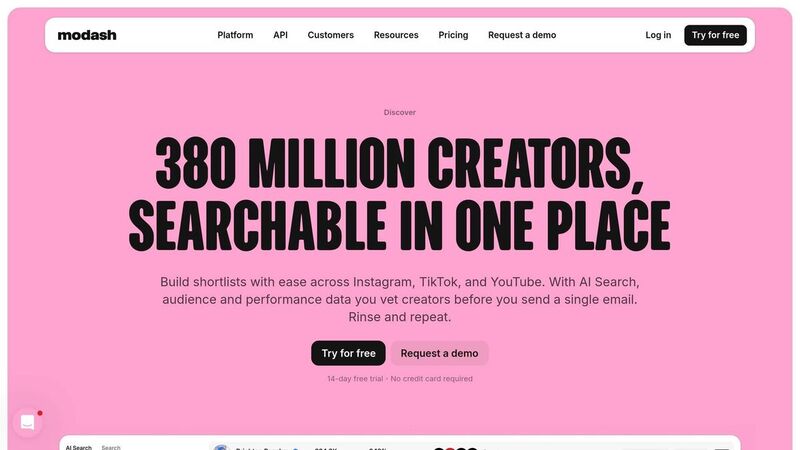
Modash is perfect for uncovering lesser-known creators, boasting a massive database of over 350 million influencers [5][6]. Its AI-powered natural language search simplifies the process - just type queries like "fitness creators in LA with high engagement", and it delivers precise results without complicated filters [8]. Additionally, the lookalike finder allows you to upload a top-performing creator's profile to discover similar influencers. Pricing starts at $199 per month when billed annually [5][6].
HypeAuditor focuses heavily on fraud detection, analyzing over 35 metrics to generate an Audience Quality Score (AQS). This feature flags fake followers, engagement pods, and suspicious growth patterns, helping brands avoid costly mistakes [5][7][9]. With 43% of brands reporting issues related to creator brand safety, tools like this are essential [1]. Basic plans begin at $299 per month [5][7].
Upfluence and Aspire for Niche Campaigns
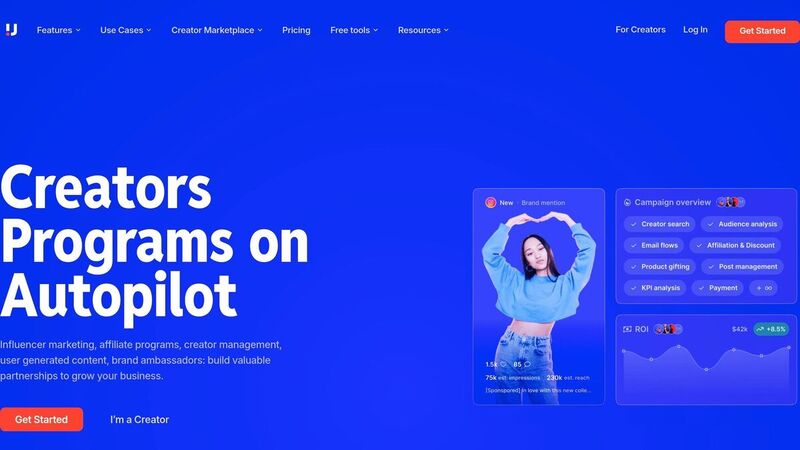
While Modash and HypeAuditor cater to broad discovery needs, Upfluence and Aspire specialize in niche campaigns and long-term collaborations.
Upfluence is tailored for e-commerce brands, focusing on measurable outcomes like sales rather than vanity metrics. It integrates seamlessly with platforms like Shopify, Amazon, and WooCommerce, enabling brands to track revenue through unique discount codes generated for each creator [5][9]. Its AI co-pilot, Jaice, matches products to influencers based on audience fit and past performance [5]. Pricing starts at $478 per month with annual contracts [7].
Aspire (formerly AspireIQ) prioritizes relationship-building over one-off transactions. It helps brands foster long-term partnerships and create user-generated content at scale. Workflow automation features streamline tasks like contract signing and content approvals, reducing manual effort by up to 70% [8]. Custom plans typically start at $2,000 per month with annual commitments [7].
Traackr for Enterprise Teams
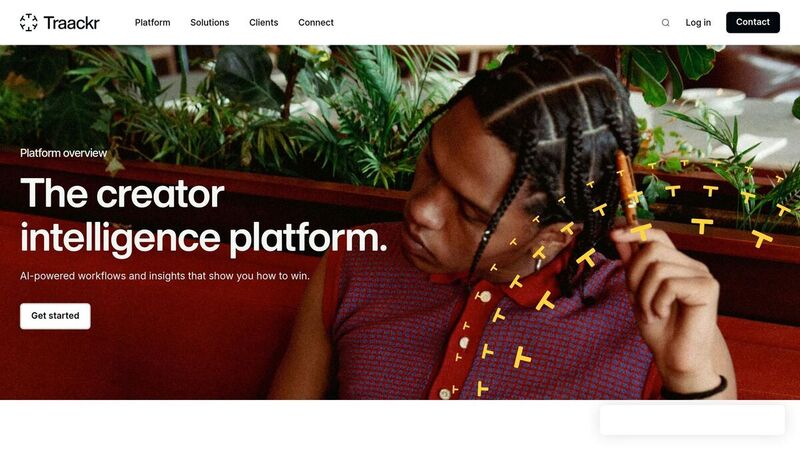
For larger organizations, Traackr offers advanced tools designed for enterprise-level campaigns. It supports multi-market operations and ensures compliance with regional and FTC guidelines. Additionally, its Brand Vitality Score (VIT) provides competitive benchmarking for strategic insights [7][9]. With enterprise pricing ranging from $32,500 to $55,000 per year, Traackr is ideal for teams requiring governance, API access, and cross-departmental collaboration [7].
"The era of manual influencer management is coming to a close. To stay competitive in 2025, brands must leverage an AI influencer marketing platform that fits their specific needs." - Stormy AI Blog [8]
Step-by-Step Guide to Discover and Vet Influencers
Finding influencers isn't as simple as scrolling through social media. With 68% of brands struggling to find creators who genuinely align with their values [2], it’s clear that a structured approach is essential. A little planning upfront can save you from wasted time and costly mismatches. Here’s how to do it right.
Finding Influencers Across Platforms
Start by defining your ideal influencer profile. Think about their niche, audience size, tone, and geographic location. This clarity ensures you focus on creators who truly fit your brand [3].
Each platform offers unique ways to discover influencers:
- Instagram: Use the Creator Marketplace to filter by niche and demographics, or search hashtags like #sustainablefashion paired with location tags.
- TikTok: The Creator Marketplace provides detailed analytics, including audience interests and age ranges, so you can verify demographic fit before reaching out.
- LinkedIn: Use advanced search filters to find thought leaders in your industry, especially for B2B campaigns.
- Emerging platforms (like Bluesky and Threads): Since native discovery tools are still evolving, AI-powered platforms that aggregate profiles across multiple platforms can be extremely helpful [3].
For smaller campaigns, manual methods often work well. Monitor hashtags relevant to your industry, check out competitors’ tagged posts to see who they’re collaborating with, and look for creators who naturally mention your brand. These organic mentions often lead to partnerships that feel more genuine, as the creator already has an authentic connection to your niche [3].
Once you’ve compiled a list of potential influencers, the next step is vetting them to ensure they’re a good match.
Vetting Influencers for Quality and Fit
Proper vetting ensures you’re working with authentic influencers, not those inflating their metrics. Start by verifying engagement rates. Micro-influencers, for example, often deliver 3–5x higher engagement rates than mega-influencers, making them a smart choice for many campaigns [2].
Look beyond the numbers. Check the quality of comments on their posts - genuine interactions are a strong indicator of an engaged audience. Use tools like Social Blade to analyze follower growth patterns; sudden spikes can signal fake followers or bot activity [1].
Take the time to review their last 20–30 posts. This gives you a sense of their content quality, tone, and overall fit with your brand. Make sure their audience demographics (age, gender, location) align with your target customer profile. With 43% of brands reporting issues with creator brand safety [1], it’s critical to dig into their recent content and past behavior to confirm they share your brand’s values.
Discovering Micro-Influencers and KOLs on Bluesky
Tapping into micro-influencers on platforms like Bluesky opens up fresh opportunities to connect with authentic voices before they gain widespread attention. With its decentralized structure, Bluesky allows brands to identify these influencers early, offering a real chance to stand out. The platform's rapid growth - boasting over 35.2 million users - makes finding key opinion leaders (KOLs) a smart move for building impactful partnerships.
Using TheBlue.social Bluesky Tools
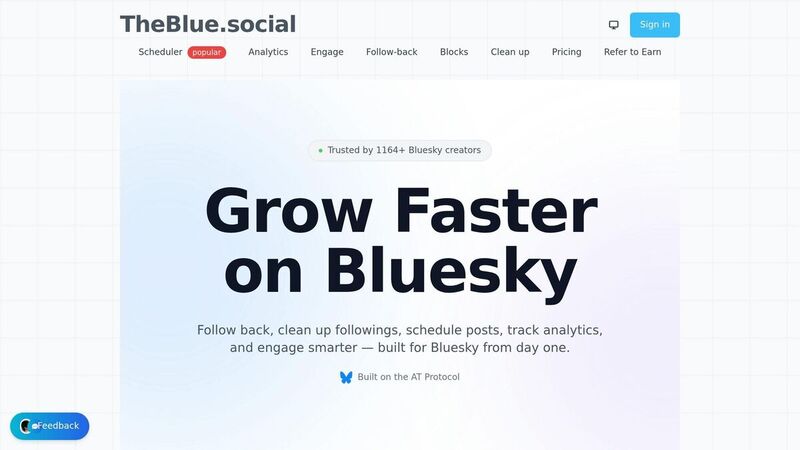
TheBlue.social provides several tools to simplify influencer discovery on Bluesky. For instance, their Bluesky Analytics offers insights into engagement trends and follower growth. Plus, starter packs focus on curated influencer lists tailored to niches like sustainable fashion or tech startups.
Another handy feature is the follow-back tool, which helps you manage and build relationships with emerging creators. When assessing micro-influencers, it’s essential to revisit the engagement rate formulas and benchmarks outlined earlier in this guide to ensure you're partnering with creators who align with your goals.
Bluesky also emphasizes authenticity through its domain-based verification system. Influencers with custom domain handles (e.g., @name.brand.com) demonstrate verified authenticity, which is crucial for building trustworthy collaborations [10]. Since Bluesky operates on the ATProto protocol, all data is public and auditable, allowing tools like ClearSky.app to provide a complete view of an influencer's interaction history [10]. These features make it easier to identify genuine creators while ensuring transparency in your vetting process.
Community Discovery on Bluesky
Bluesky’s community-driven design makes manual discovery a valuable strategy. By tracking relevant hashtags, you can spot creators who spark meaningful conversations. Look for signals of authenticity, such as consistent posting, varied content formats (like text or images), and genuine engagement with their audience [3].
Pay close attention to who is frequently mentioned or tagged in your niche - these organic endorsements often highlight emerging KOLs. Dive into the comments as well; thoughtful interactions often indicate a creator’s active involvement with their community. With brand safety being a constant concern, Bluesky’s transparent data structure becomes a vital tool for thorough vetting and ensuring partnerships align with your values [1].
Measuring Influencer Discovery Campaign Success
Finding the right influencers is just the beginning - proving that these partnerships drive real business results is where the real work begins. By 2025, a striking 92% of brands are expected to set specific metrics before launching creator searches [4]. This trend highlights the growing emphasis on accountability in influencer marketing. Properly defining and tracking metrics not only validates your discovery process but also ensures your efforts align with the brand values you’ve established. Let’s break down how to set these metrics and monitor performance effectively.
Setting Campaign KPIs
Establishing clear KPIs turns influencer collaborations into strategic investments. These goals generally fall into five main categories:
- Awareness metrics: Impressions and reach measure how many people see your content.
- Engagement metrics: Likes, comments, and shares gauge audience interaction and interest.
- Traffic metrics: Clicks and click-through rates show how effectively influencers drive audiences to your brand.
- Conversion metrics: Purchases, sign-ups, and downloads reflect tangible business outcomes.
- Cost efficiency metrics: Metrics like cost per engagement (CPE), cost per click (CPC), and cost per acquisition (CPA) help you compare influencer campaigns to other marketing efforts.
While awareness metrics give you a sense of your campaign’s reach, engagement metrics provide a deeper look into how audiences are connecting with your message. To put it in context, engagement rates should always be compared to industry benchmarks. Traffic metrics help track how audiences progress toward your brand, while conversion metrics capture the direct business impact. Cost efficiency metrics, on the other hand, allow you to evaluate the return on your investment. For example, influencer campaigns often achieve customer acquisition costs between $15 and $50, far lower than the $30 to $100+ often seen with traditional advertising [2].
To track these metrics effectively, make use of tools like UTM parameters in URLs (e.g., ?utm_source=creator_name) to pinpoint which influencers are driving traffic to your site. Assigning unique promo codes and deploying conversion pixels can help you track direct sales and other conversions. To measure ROI, use this formula: (Revenue - Total Campaign Costs) / Total Campaign Costs. Be sure to account for all expenses, including creator fees, platform charges, and management time [1].
Tracking Performance with Analytics Tools
Once your KPIs are in place, analytics tools can provide the real-time insights you need to optimize your campaigns. These tools connect directly to platform APIs, offering automated dashboards and trend analysis that eliminate the errors and inefficiencies of manual tracking [1]. Beyond just follower counts, they can calculate authentic engagement rates, analyze audience demographics (like age, location, and interests), and even flag suspicious bot activity [1][2].
One major advantage of these tools is their ability to go beyond last-click attribution, which often undervalues creators who focus on building awareness. Instead, multi-touch attribution models distribute credit across the entire customer journey, ensuring every influencer who contributes to a conversion is recognized - not just the one responsible for the final step [1].
For example, TheBlue.social's analytics provides detailed insights into engagement trends and follower growth on Bluesky. Thanks to Bluesky’s transparent, public data structure, you can easily verify authenticity and track interaction histories, offering a level of clarity that’s harder to achieve on other platforms.
Conclusion
This guide highlights how precise metrics, AI-powered tools, and new platforms are shaping the future of influencer discovery. In 2025, success hinges on finding creators who genuinely connect with their audiences and align with your brand's values. As marketing budgets grow, competition for genuine partnerships is becoming tougher [1]. Leading brands focus on real engagement, use AI tools to cut research time by over 80%, and thoroughly vet creators to ensure brand safety [1][2].
Micro-influencers, with their close-knit audiences, often achieve much higher engagement rates [2]. These creators foster communities where their recommendations feel personal rather than purely transactional. When you pair this level of targeting with proper tracking tools - like UTM parameters, unique promo codes, and conversion pixels - you can clearly measure which partnerships deliver real results.
Beyond the usual platforms, newer networks are opening up fresh opportunities. Platforms like Bluesky, for example, offer early-mover advantages for brands ready to go beyond Instagram and TikTok. With its transparent data structure and a growing base of active users, Bluesky allows brands to discover emerging creators before their sponsorship rates climb. Tools such as TheBlue.social's cross-post scheduler and Bluesky analytics make it easier to track engagement trends and verify a creator's authenticity on these emerging platforms.
The winning strategies in 2025 combine the speed and accuracy of AI-powered searches with the human judgment needed to evaluate a creator's values and authenticity. To avoid wasting time, start with a clear set of criteria - like niche, audience demographics, tone, and location [3]. Then, manually review engagement quality by checking comments to separate genuine community interaction from bot-generated spam [1].
FAQs
How can I quickly identify fake followers?
To identify fake followers effectively, consider using influencer audit tools. These tools can evaluate engagement rates and the authenticity of followers. Typically, fake followers boost numbers but contribute little to activity - think minimal likes or comments. Be on the lookout for red flags like sudden surges in follower counts, accounts that appear inactive, or usernames that seem overly generic. Another quick tip: review comments for relevance and scan profiles for signs of automated or bot-like behavior. These steps can make spotting fake accounts much easier.
What’s a “good” engagement rate in 2025?
In 2025, an engagement rate between 1% and 3% is generally considered "good", though this can vary depending on the platform and niche. Higher engagement rates usually indicate a more involved and genuine audience. However, factors such as the type of content you share and your audience's demographics can greatly influence these numbers.
How can I track influencer ROI effectively?
To measure influencer ROI effectively in 2025, focus on analyzing campaign-specific metrics such as click-through rates, conversions, and sales generated from influencer content. Leverage advanced tools with analytics dashboards to combine data from various platforms, giving you a comprehensive view of your campaign's performance.
Boost your tracking efforts by using unique promo codes, custom tracking links, and conversion pixels. These tools help you directly attribute outcomes like purchases or sign-ups to the influencer campaign, offering clear, data-driven insights into its success.