How to Monitor Privacy Compliance Across Platforms
Last updated: April 21, 2026
Privacy compliance is complex but essential for avoiding heavy fines and maintaining trust. Managing compliance across platforms like LinkedIn, Instagram, TikTok, or X requires understanding global regulations (e.g., GDPR, CCPA) and platform-specific rules. Here's how you can stay compliant:
- Understand Regulations: GDPR mandates user consent and data deletion rights, while CCPA focuses on transparency and opt-out options. HIPAA governs health data, and other laws vary by state.
- Tailor to Each Platform: LinkedIn has stricter data policies, while platforms like Instagram and TikTok heavily rely on data for ads. On Bluesky, you can use a Bluesky Analytics Dashboard to monitor engagement while maintaining transparency. Discord and Pinterest lean toward privacy-conscious practices.
- Track Data Flows: Map data collection points (APIs, SDKs, etc.) and ensure consent mechanisms are clear and compliant. Use tools to monitor data collection and flag anomalies.
- Automate Monitoring: Set up regular scans to catch issues early. Use alerts and dashboards to track metrics like data volume, sensitive fields, and policy changes.
- Train Your Team: Ensure staff understands platform-specific requirements and the importance of data minimization. Regular audits and training help close compliance gaps.
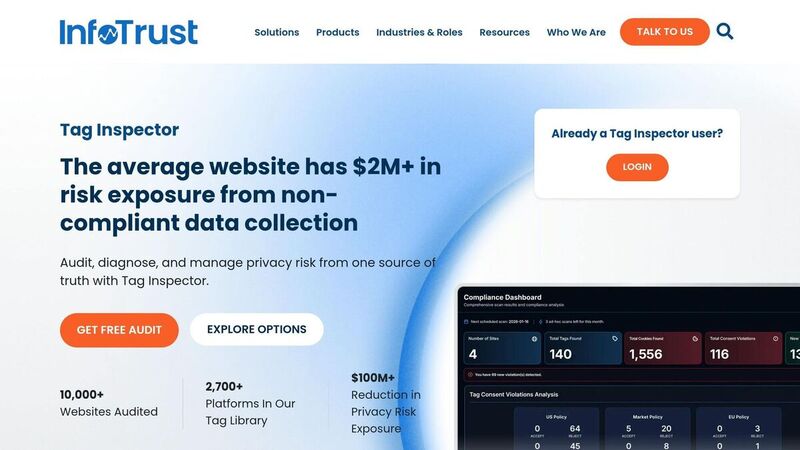
Tag Inspector Demo: The Must-Have Tool for Data Privacy and IT Leaders
Privacy Regulations for Social Media Platforms
GDPR, CCPA, and HIPAA Requirements
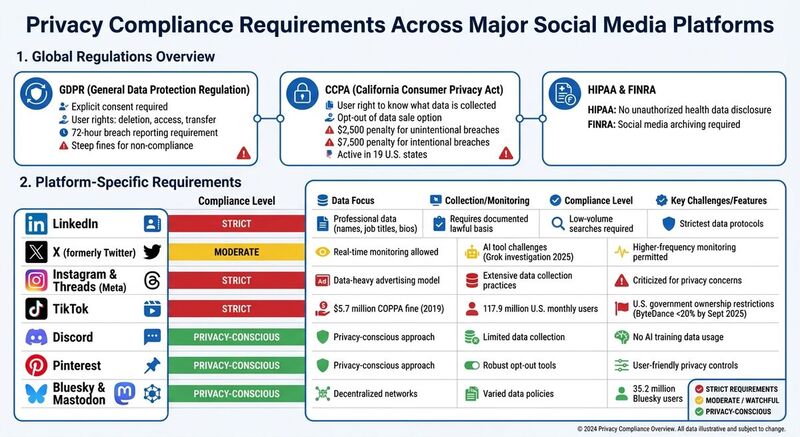
The General Data Protection Regulation (GDPR) requires companies to obtain explicit consent or demonstrate a legitimate interest before processing user data. It also gives users the right to request their data be deleted, accessed, or transferred. Non-compliance can lead to steep fines and requires organizations to report data breaches within 72 hours.
The California Consumer Privacy Act (CCPA) allows users to know what data is being collected about them and to opt out of its sale. Violations can result in penalties of $2,500 for unintentional breaches and $7,500 for intentional ones. With privacy laws now in place across 19 U.S. states, the CCPA has become a benchmark for companies operating nationwide.
When it comes to health information, HIPAA steps in. Social media use by healthcare providers - such as sharing patient testimonials or promoting wellness programs - must strictly avoid unauthorized disclosures of health data. Similarly, in the financial sector, FINRA requires that social media communications be archived to ensure compliance during audits.
Platform-Specific Privacy Requirements
While broad regulations like GDPR and CCPA set the foundation, each social media platform enforces its own privacy rules, requiring businesses to adapt their strategies accordingly.
On LinkedIn, professional data such as names, job titles, and bios is treated with extra care. Companies must document a lawful basis for large-scale data collection, often relying on low-volume searches and targeted queries to meet compliance standards.
X (formerly Twitter) allows real-time data monitoring but presents new challenges tied to AI tools. For example, in 2025, EPIC joined a coalition to investigate Grok, an AI tool on X, for allegedly enabling the misuse of platform data to share non-consensual intimate images [1].
Both Instagram and Threads (owned by Meta) operate under a data-heavy advertising model, drawing criticism for their extensive data collection practices. TikTok has faced similar scrutiny. In 2019, it paid $5.7 million for violating COPPA, and by September 2025, the U.S. government required ByteDance to reduce its ownership to under 20% to safeguard its 117.9 million U.S. monthly users [2].
Other platforms like Discord and Pinterest have adopted more privacy-conscious approaches. Discord limits data collection and avoids using data for AI training, while Pinterest offers robust tools for users to opt out of data collection [2].
Navigating platform-specific rules means tailoring compliance strategies to each network. For instance, professional platforms like LinkedIn demand stricter data protocols compared to consumer-focused platforms like Instagram. Decentralized networks like Bluesky and Mastodon add further complexity with their varied data policies. Before expanding any monitoring initiatives, it’s crucial to document your lawful basis and consult legal experts - especially when working across multiple jurisdictions [3].
Tracking Data Flows and User Consent
Finding Data Collection Points
Social media platforms gather data through various methods like APIs, SDKs, and webhooks, creating numerous entry points into your systems. For instance, platforms use Open Graph tags to pull metadata from links, such as titles, descriptions, and images [5].
To build a solid privacy compliance framework, you need to start by mapping out where data enters your organization. For public data from platforms like Instagram, TikTok, X, or LinkedIn, standardized scrapers or cross-platform automation tools can be helpful. Normalize the metadata from these platforms using a shared schema with fields like platform, content_id, author, text, engagement, posted_at, and scraped_at [3].
Keep in mind that professional networks like LinkedIn have stricter rules regarding personal data collection. Information such as names, bios, and job titles must be considered sensitive, and you’ll need to document your lawful basis for collecting this data before scaling any monitoring efforts [3]. Tools like LinkedIn Post Inspector or Facebook Sharing Debugger can help verify how data is being extracted [5].
Once you’ve mapped these data flows, the next step is to evaluate the consent mechanisms that govern these collection points.
Reviewing Consent Systems
Your consent systems need to be transparent and comply with GDPR and CCPA regulations, even when you’re using automated tools [3]. If data is being collected through APIs or webhooks, document the consent flow and ensure users are informed about how their data will be used.
A key principle here is data minimization - only collect the fields that are absolutely necessary for your program [3]. Automate checks to compare current data volumes with a 7-day baseline to identify any sudden spikes. Such changes might indicate a need to reassess your collection practices or could reflect shifts in user behavior that require attention [3]. Tools like n8n, Make, or Zapier can help you document the entire pipeline - from the initial data collection to its final storage - providing a clear audit trail for compliance reviews [3].
Setting Up Automated Monitoring Systems
Configuring Regular Compliance Scans
Setting up automated scans at regular intervals is key to catching privacy issues early. For platforms with frequent data updates like X (Twitter), consider scheduling scans every 1–6 hours to keep tabs on consent banner displays and cookie management. On slower-changing platforms like LinkedIn or Pinterest, daily or weekly scans should suffice. Each platform - whether it’s Instagram, TikTok, X, or LinkedIn - requires specific tools, such as scrapers or automated actors, tailored to its unique structure. To make sense of the data, normalize it into a shared schema with fields like platform, URL, status, and scraped_at. Use 7-day delta checks to detect spikes in data volume and flag potential issues immediately.
Delta checks work by comparing the latest scan results to a 7-day baseline. If the current data volume is more than double the usual rate, an alert is triggered. This approach can quickly highlight changes in third-party data sharing or shifts in platform policies that might impact compliance. To ensure your team responds swiftly, use webhooks to send scan metadata - like completion statuses - directly to tools such as Slack or PagerDuty.
Start small by focusing on one platform and one compliance metric. Once you’ve established a stable process, you can expand to cover additional metrics and platforms. These automated scans provide the foundation for more advanced compliance monitoring.
Using TheBlue.social for Compliance Monitoring
Once your automated scans are up and running, dedicated tools like TheBlue.social can help centralize and simplify your monitoring efforts. If you manage content across multiple platforms, TheBlue.social’s status checker tools are invaluable. They can verify whether platforms like Bluesky, X (Twitter), LinkedIn, Pinterest, or Mastodon are experiencing downtime - helping you determine whether scan failures are caused by your system or the platforms themselves.
For teams working with Bluesky’s 35.2 million users, Bluesky Analytics offers tools to track engagement and follower growth. These metrics can help identify unusual activity patterns, which may point to potential privacy concerns. Additionally, the platform’s cross-posting scheduler provides a unified content calendar for X, Threads, Instagram, Pinterest, LinkedIn, Bluesky, and Mastodon. This centralized view of your content distribution aids in documenting data flows, making compliance audits more manageable.
Another helpful feature of TheBlue.social is its Open Graph Preview Tool. This tool ensures that metadata - like consent notices and privacy policy links - displays correctly across platforms such as Facebook, Threads, X, LinkedIn, and Discord. It’s a simple way to confirm that your compliance-related information is visible and properly formatted wherever your content appears.
Building Dashboards and Alert Systems
Creating Compliance Tracking Dashboards
After running automated compliance scans, a centralized dashboard is essential for quick and effective data review. A well-designed compliance dashboard doesn't just collect data - it translates it into actionable insights. For example, start by monitoring data collection volume, which tracks the number of records pulled from each platform during scans. Any unexpected spikes here could signal over-collection or potential data breaches. Imagine your daily pull from X (Twitter) typically hovers around 2,000 records but suddenly jumps to 5,000 - this anomaly should be flagged immediately for investigation.
Another critical metric to track is sensitive data fields like names and job titles. Your dashboard should clearly display which data types are being pulled from platforms like Instagram, LinkedIn, TikTok, or Bluesky (which boasts 35.2 million users). This visibility ensures your data collection aligns with privacy laws and regulations.
Additionally, keep tabs on your monitoring cadence. This means displaying the frequency and success rate of automated scans - hourly for fast-paced platforms like X and daily or weekly for slower-changing ones like Pinterest. Your dashboard should also track sentiment shifts and mention velocity, as sudden changes could hint at privacy-related PR crises or potential data leaks that need immediate attention.
To make sense of data from multiple platforms, use a standardized schema to consolidate metrics. This allows for consistent comparisons across platforms and ensures your dashboard insights can drive effective alert configurations.
Setting Up Compliance Alerts
Once your dashboard is up and running, the next step is to configure tiered alert systems based on the insights it provides. Tier 1 alerts should handle critical issues like privacy breaches or unauthorized data sharing. These need immediate attention, so configure notifications to go directly to Slack or PagerDuty. Tier 2 alerts can focus on less urgent updates, such as daily summaries of minor policy changes or campaign-specific tags. Tier 3 alerts are broader, offering weekly reports on industry trends and full audit summaries.
To ensure accuracy, implement delta checks that compare current data against a 7-day baseline. For instance, if data volume suddenly doubles, your system should notify compliance officers immediately. Use webhooks to push metadata or row counts to external systems as soon as a monitoring run finishes, enabling near real-time alerts.
Every alert should include direct links to relevant URLs so your compliance team can quickly verify the source of potential risks. For example, if an alert flags unusual app access on Meta or suspicious login activity on TikTok, your team can immediately review the source data. This rapid-response approach minimizes delays between detection and action, reducing the risk of small issues escalating into major compliance violations.
Running Audits and Training Your Team
Conducting Privacy Compliance Audits
Regular audits are essential for spotting compliance gaps before they escalate into expensive fines. Recent penalties have shown that relying solely on automated monitoring isn't enough - your audit program needs to work hand-in-hand with these systems.
Focus on auditing data deletion processes and reviewing tracking technologies like cookies and pixels to ensure they align with GDPR and CCPA guidelines. Reports indicate that many companies fail to fully delete user data when requested, which directly violates these regulations [7].
It's also critical to regularly test automated systems and AI models. With 70% of U.S. adults expressing distrust in how companies handle AI responsibly [2], you need to verify how personal data is used in algorithms. Offer clear opt-out options for AI training, especially as platforms increasingly adopt automatic opt-in policies for using user content to train models [2][7].
Use audit findings to create a roadmap for corrective actions. Pinpoint weaknesses in your monitoring systems and outline specific steps to address them [8]. For instance, if your audit uncovers that your LinkedIn monitoring lacks a documented lawful basis, prioritize this issue in your training sessions before scaling any data collection efforts on professional networks [3].
The insights from these audits should drive actionable improvements and help shape targeted team training that keeps up with evolving privacy regulations.
Training Teams on Privacy Requirements
Audits often highlight gaps that can be quickly addressed through effective team training. Even the best monitoring systems are useless if your team doesn’t know how to apply them correctly. Training ensures your staff understands not only the technical aspects but also the reasoning behind compliance measures.
Customize training to fit the data protocols of each platform. For example, LinkedIn requires stricter terms, such as low concurrency and a documented lawful basis for data collection, compared to platforms like Instagram or TikTok [3]. On the other hand, platforms like X (Twitter) and Bluesky allow higher-frequency monitoring, which is useful for tracking fast-moving trends and hashtags [3].
Emphasize data minimization as a key principle. Treat all personal information - names, job titles, bios - as sensitive, and collect only the data fields necessary for your business goals [3]. This is especially important since 81% of U.S. adults are concerned about how companies might misuse the data they collect [2].
Incorporate social engineering awareness into your training. Social media platforms are particularly vulnerable to phishing and impersonation, so educating your team on these risks is crucial [6]. Teach them to manually review automated alerts to ensure proper context is applied, especially during potential crises. For example, a tiered alert system - ranging from immediate notifications for privacy breaches to weekly reports on industry trends - can help manage responses without overwhelming the team with unnecessary alerts [3].
For teams managing multiple platforms, implement delta checks to compare current data collection volumes against a 7-day baseline. These checks can help identify unusual patterns, such as sudden spikes in data collection, which might signal compliance issues [3]. Establish clear protocols for consulting legal counsel when dealing with complex jurisdictions or high-risk monitoring scenarios [3].
Summary and Next Steps
To bring everything together, it's time to streamline compliance monitoring into a unified, continuous process. Privacy compliance monitoring requires systems that are both dependable and efficient. Without this, the risks are steep - non-compliance can lead to hefty penalties. Organizations that have adopted thorough compliance frameworks report a 95% reduction in legal risks[4].
Here’s how to get started: Begin with a single platform and focus on one key metric. Only expand your efforts once you’ve confirmed that your monitoring setup is reliable[3]. Automate scans to align with platform-specific activities, and incorporate delta checks to flag any unusual spikes automatically[3].
When managing alerts, prioritize based on urgency:
- Critical privacy terms: These need immediate attention.
- Campaign tags: A daily digest is sufficient.
- Industry trends: These can be reviewed on a weekly basis[3].
Make sure these alerts are connected to tools like Slack, email, or PagerDuty so your team can quickly evaluate flagged issues using sample URLs for context[3].
Once you’ve established a dependable scanning system, simplify your operations with centralized monitoring tools. Platforms like TheBlue.social allow you to consolidate and standardize compliance data across multiple channels, including X (formerly Twitter), Threads, LinkedIn, Instagram, Pinterest, Bluesky, and Mastodon. This eliminates the need for manual checks on each platform.
Additionally, classify personal information as sensitive and limit data collection to only what’s absolutely necessary[3]. Stick to clear data minimization principles and ensure your monitoring process is continuously refined with input from legal guidance.
FAQs
What data should I avoid collecting on each platform?
Avoid gathering sensitive or personally identifiable information (PII), like location data, login history, or details from third-party apps, unless you have clear and explicit user consent. Collecting such data without permission can create serious privacy risks, including identity theft, profiling, or misuse for targeted advertising purposes. Instead, prioritize limiting data collection to safeguard user privacy and align with established best practices.
How can I prove user consent for monitoring?
To ensure user consent for monitoring, it's crucial to get clear and informed permission before any data collection or analysis begins. Use opt-in forms or agreements that clearly outline what data will be monitored and how it will be used. Be transparent - explain the scope of the monitoring process and always provide users with an option to withdraw their consent at any time. Keep detailed records of these consents, as they may be essential for demonstrating compliance during audits or investigations.
What alerts should be treated as privacy emergencies?
Situations involving threats, harassment, data breaches, or security risks demand immediate attention. These are privacy emergencies and can include anything from leaked sensitive information to targeted harassment. Mentions or comments that put individuals or organizations at risk fall under this category.
The key is quick recognition and decisive action. Identifying these threats early helps safeguard privacy and ensure safety across platforms.